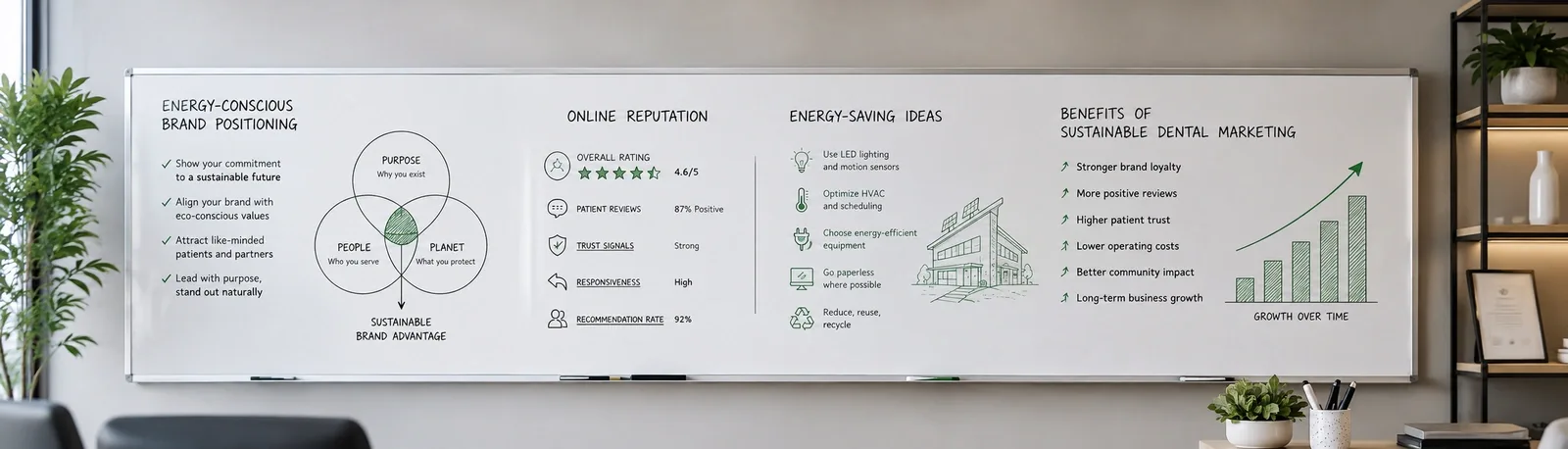
The Strategy Conscious Consumers Are Looking For

    Digital Marketing for Sustainability

    The Short Answer

    Yes — sustainable digital marketing builds real brand value, but only when your claims are specific, substantiated, and backed by genuine operational change.

    Vigorant Healthcare Marketing Team·June 2026·11 min read·Source: FTC Green Guides
    8 in 10
    shoppers worldwide prefer buying from businesses that practice sustainable advertising
    Global consumer sustainability research
    Scroll for the evidence
    Image Compression
    Lean Website Code
    Green Hosting
    Database Cleanup
    Email List Hygiene
    Reduced Send Volume
    Efficient Caching
    Lower-Resolution Media
    Carbon Footprint Audits
    Page Weight Reduction
    Conscious Brand Voice
    CSR Storytelling
    Honest Eco-Claims
    Sustainability KPIs
    Value-Aligned Targeting
    Long-Term Roadmaps
    Image Compression
    Lean Website Code
    Green Hosting
    Database Cleanup
    Email List Hygiene
    Reduced Send Volume
    Efficient Caching
    Lower-Resolution Media
    Carbon Footprint Audits
    Page Weight Reduction
    Conscious Brand Voice
    CSR Storytelling
    Honest Eco-Claims
    Sustainability KPIs
    Value-Aligned Targeting
    Long-Term Roadmaps
    Sustainable Marketing Delivers This

    What Sustainable Marketing Actually Delivers

    A credible green marketing strategy creates measurable advantages — from a stronger brand to leaner operations and a smaller digital footprint.

    Access to New, Growing Markets
    Roughly eight in ten shoppers prefer brands that market responsibly. Embracing sustainability opens the door to conscious consumers — a fast-growing segment led by Gen Z — that competitors ignore.
    Stronger Brand Reputation & Trust
    Authentic environmental commitment improves credibility and differentiates your practice. It signals shared values, which is one of the most durable reasons patients and customers stay loyal.
    Operational Cost Savings
    Optimising resource use, energy, and digital waste reduces long-term cost. Leaner email programs, lighter websites, and efficient hosting cut spend while shrinking environmental impact.
    Business Longevity & Loyalty
    Connecting with audiences through shared values builds a loyal base. A sustainability commitment helps a practice stay relevant as consumer expectations shift toward responsibility.
    Lower Digital Carbon Footprint
    Compressing images, trimming page weight, and removing dead data reduce the energy each visit consumes. Smaller, faster pages are better for the planet and for performance.
    Higher-Quality, Leaner Content
    A 'less is more' approach favours fewer, more relevant communications over high-volume sends. Quality content captures attention faster while reducing wasted impressions and energy.
    This Still Needs Real Substance

    What Green Marketing Can't Fix Alone

    Messaging alone cannot manufacture trust. The hardest, most valuable work sits in genuine operational change, evidence, and disciplined claims.

    Substantiating Every Claim
    The FTC Green Guides require evidence behind environmental claims. Marketing cannot invent proof — your operation must hold documentation for each statement to avoid greenwashing and liability.
    Real Operational Change
    A green campaign on top of unchanged practices is hollow and eventually exposed. Sustainability has to be integrated across the business; marketing reflects that change, it cannot substitute for it.
    Strategic Consistency Over Time
    Environmental concerns play out over long horizons. A credible approach requires a long-term plan and consistent transformation, not a one-off seasonal message that contradicts day-to-day behaviour.
    Honest Brand Positioning
    Telling consumers sustainability matters is easy; aligning every other aspect of the brand to back it up is hard. Positioning must be authentic, qualified, and free of exaggeration.
    Healthcare Accuracy & Compliance
    For medical, dental, and chiropractic practices, sustainability messaging must never distort clinical information, mishandle patient data, or cross HIPAA-aware and regulatory lines.
    Measurable Accountability
    Without measurable goals and tracking, sustainability claims drift into marketing slogans. Real progress requires KPIs, baselines, and honest reporting that humans must define and own.
    The Evidence

    Consumers Reward Responsibility — But Demand Proof

    The case for sustainable digital marketing is grounded in consumer behaviour. Around eight in ten shoppers worldwide say they prefer buying from businesses that practice responsible, sustainable advertising, and environmental consciousness is a defining concern for Gen Z. Roughly 76% of U.S. digital marketers themselves believe the industry should do more to reduce carbon emissions.

    But preference comes with a condition: credibility. Consumers and regulators have grown skeptical of vague 'eco-friendly' labels. The U.S. Federal Trade Commission's Green Guides exist precisely because unsubstantiated environmental claims mislead buyers. The brands that win are the ones whose claims are specific, qualified, and provable.

    "

    "Marketers should not make broad, unqualified general environmental benefit claims... It is highly unlikely that marketers can substantiate all reasonable interpretations of these claims."

    — U.S. Federal Trade Commission · Green Guides
    Marketing team reviewing sustainability strategy and environmental data on laptop and whiteboard
    76%
    of U.S. marketers say the industry should cut carbon emissions
    Industry survey
    Strategy vs. Substance — Channel by Channel

    Every Sustainable Marketing Tactic, Honestly Evaluated

    Select a channel below to see the eco-friendly tactic that reduces impact — and the real operational substance it must rest on to stay credible.

    The Sustainable Tactic
    • Compress and right-size images
    • Remove unused scripts and bloat
    • Enable efficient caching
    • Choose low-carbon hosting
    • Audit and reduce page weight
    The Substance It Requires
    • Performance and SEO architecture
    • Accessibility and UX integrity
    • Honest sustainability messaging on-site
    • Conversion design that respects trust

    Key Pattern: In every channel, sustainable tactics cut digital waste and energy. Real substance — evidence, operational change, and honest claims — is what keeps them credible.

    The Balance

    Why Credible Brands Pair the Message With Real Change

    Sustainable messaging and genuine operational substance are not in competition. Together they create a green brand that customers actually trust.

    The Marketing Message
    Conscious Audience Reach
    Attracts value-driven consumers
    Brand Differentiation
    Stands out from competitors
    Compelling Storytelling
    Communicates CSR clearly
    Lower Media Footprint
    Leaner, more efficient delivery
    The Operational Substance
    Substantiated Claims
    Evidence behind every statement
    Real Practice Change
    Sustainability built into operations
    Long-Term Consistency
    A gradual, credible roadmap
    Measurable Accountability
    KPIs that prove progress

    The strongest sustainable brands keep message and substance in balance.

    A Generic Green Campaign — The Honest Trade-Off

    A Surface-Level Green Campaign — What You Get
    A timely sustainability message that signals you care
    An 'eco-friendly' badge or banner across your site and social
    A blog post or two referencing your environmental values
    Seasonal campaign creative tied to environmental dates
    A short-term lift in attention from conscious audiences
    For a practice just beginning its sustainability journey, a values-led message can be a reasonable first step — provided it reflects something genuinely true today.
    What's Missing — The Critical Gaps
    Substantiation for each claim, documented to FTC Green Guides standards
    A genuinely lighter website: compressed images, lean code, efficient hosting
    A cleaned database that stops wasting energy on dead and duplicate records
    Specific, qualified language instead of vague 'green' and 'eco' labels
    Sustainability integrated across operations, not bolted onto marketing
    Measurable KPIs and a long-term roadmap to track real progress
    Healthcare-aware compliance so claims never distort clinical messaging

    The gap between a surface-level green campaign and a credibly sustainable brand is not cosmetic. It determines whether conscious consumers trust you, whether your claims survive regulatory and public scrutiny, and whether your digital footprint actually shrinks.

    Vigorant Website Design & CRO →
    Risk Assessment

    The 4 Biggest Risks of Getting Sustainability Marketing Wrong

    Each of these risks requires deliberate human judgment and real operational backing to prevent. They are not hypothetical — they are active reputational and regulatory concerns.

    HIGH IMPACT
    Loss of Consumer Trust
    Conscious consumers are quick to spot hollow claims. A single exposed exaggeration can permanently damage credibility with the exact audience you were trying to win.
    HIGHEST RISK
    Greenwashing & Regulatory Exposure
    Unsubstantiated or vague environmental claims can violate the FTC Green Guides, inviting enforcement, legal risk, and public backlash. Every claim must be specific, qualified, and provable.
    MODERATE RISK
    Message-Reality Mismatch
    Marketing sustainability while operations stay unchanged creates a credibility gap. When behaviour contradicts the message, audiences disengage and competitors capitalise.
    COMMON RISK
    Bloated, High-Footprint Channels
    Oversized images, heavy email sends, and unnecessary content quietly inflate your carbon footprint and slow your site — undermining both your sustainability story and your conversions.
    Marketing professional reviewing sustainability compliance documentation and environmental claims
    The Approach That Works

    The Model That Actually Works: Lean Tactics, Real Substance

    The brands earning the strongest results in 2026 have rejected the false choice between a green message and genuine change. They invest in both.

    Efficient Tactics Handle
    Compressing images and trimming page weight to cut load energy and improve speed
    Cleaning duplicate, inactive, and outdated records to reduce wasteful storage
    Reducing low-value email and social volume in favour of fewer, higher-quality sends
    Choosing efficient hosting and caching that lower the footprint of every visit
    Right-sizing video and infographics so they are used only where most impactful
    Strategy & Substance Handle
    Integrating sustainability across operations so the brand story is genuinely true
    Substantiating every claim to FTC Green Guides standards before publication
    Building an authentic CSR narrative and qualified, non-exaggerated positioning
    Setting measurable sustainability KPIs and a long-term improvement roadmap
    Structuring content for AEO and GEO visibility across ChatGPT, Gemini, Perplexity, and Claude

    "Sustainability is no longer a niche priority. The brands that embed it authentically into how they operate — and communicate it credibly — are building the trust that drives long-term growth."

    — Vigorant Healthcare Marketing Team
    AI chat interface showing a consumer asking for sustainable and eco-friendly provider recommendations
    Consumers are asking:
    "Which dental practices near me are genuinely eco-friendly?"
    Asked on ChatGPT & Gemini daily
    GEO & AIO

    How Sustainability Shows Up in AI Search

    One of the most significant shifts in buying behaviour is the movement of values-based research from conventional Google results to AI-generated answers. Consumers now ask AI assistants to recommend providers and brands that align with their environmental values.

    Patients and customers increasingly ask ChatGPT, Google Gemini, Perplexity, Microsoft Copilot, and Claude for responsible, sustainable providers. Whether your practice surfaces in those answers depends on whether your content is structured, specific, and substantiated — vague green claims are rarely cited, while documented, well-organised commitments are.

    FAQ content that directly answers the sustainability questions consumers ask AI assistants
    Schema.org markup identifying your organisation and its verifiable environmental commitments
    Named authors with credentials cited on every content page
    External citations from institutional sources such as the FTC or the EPA
    Topical authority from a consistent, specific library of sustainability content
    Explore Our SEO & AEO Services
    VERDICTVigorant · June 2026

    Sustainability is not a slogan to bolt on. It is a standard that raises what credible marketing looks like.

    8 in 10
    shoppers prefer responsible brands
    global consumer research
    76%
    of marketers want lower emissions
    U.S. industry survey
    100%
    of green claims need substantiation
    FTC Green Guides
    01

    The brands earning the strongest results in 2026 pair an efficient, low-footprint marketing operation with genuine operational change — not a hollow green message.

    02

    For dental, medical, and chiropractic practices, the stakes are higher than for general consumer businesses. Your marketing operates in a trust-sensitive, regulated environment where accuracy, compliance, and authenticity are foundational — not optional.

    03

    Vigorant is a healthcare-exclusive growth marketing agency. We build credible, low-footprint, value-aligned marketing strategies for practices that want measurable growth and a brand patients trust.

    FAQ

    Frequently Asked Questions

    Practical answers for practice owners on sustainable digital marketing, greenwashing, the carbon footprint of your website, and building a credible green brand.

    Digital marketing for sustainability is the practice of integrating genuine environmental values and reduced environmental impact into your digital marketing strategy. It means promoting your practice, services, and brand in ways that minimise carbon footprint — through efficient website design, leaner email programs, and lower-energy media — while honestly communicating real environmental commitments to increasingly conscious consumers. Done credibly, it strengthens brand reputation and attracts loyal patients. Done carelessly, it risks greenwashing and the loss of trust.