Both — used together, in sync. Offline content builds local familiarity; online content converts it into booked patients. The win is in the handoff between them.
Offline marketing builds tangible, local familiarity and trust in the community — the awareness layer that makes your online presence convert.
The decision to actually book a healthcare appointment happens almost entirely online — where patients research, verify, and convert.
According to the Pew Research Center, roughly 95% of U.S. adults now use the internet, and the vast majority go online daily. That means almost everyone who sees your offline marketing — a banner, a brochure, a mailer — will check you out online before deciding to book.
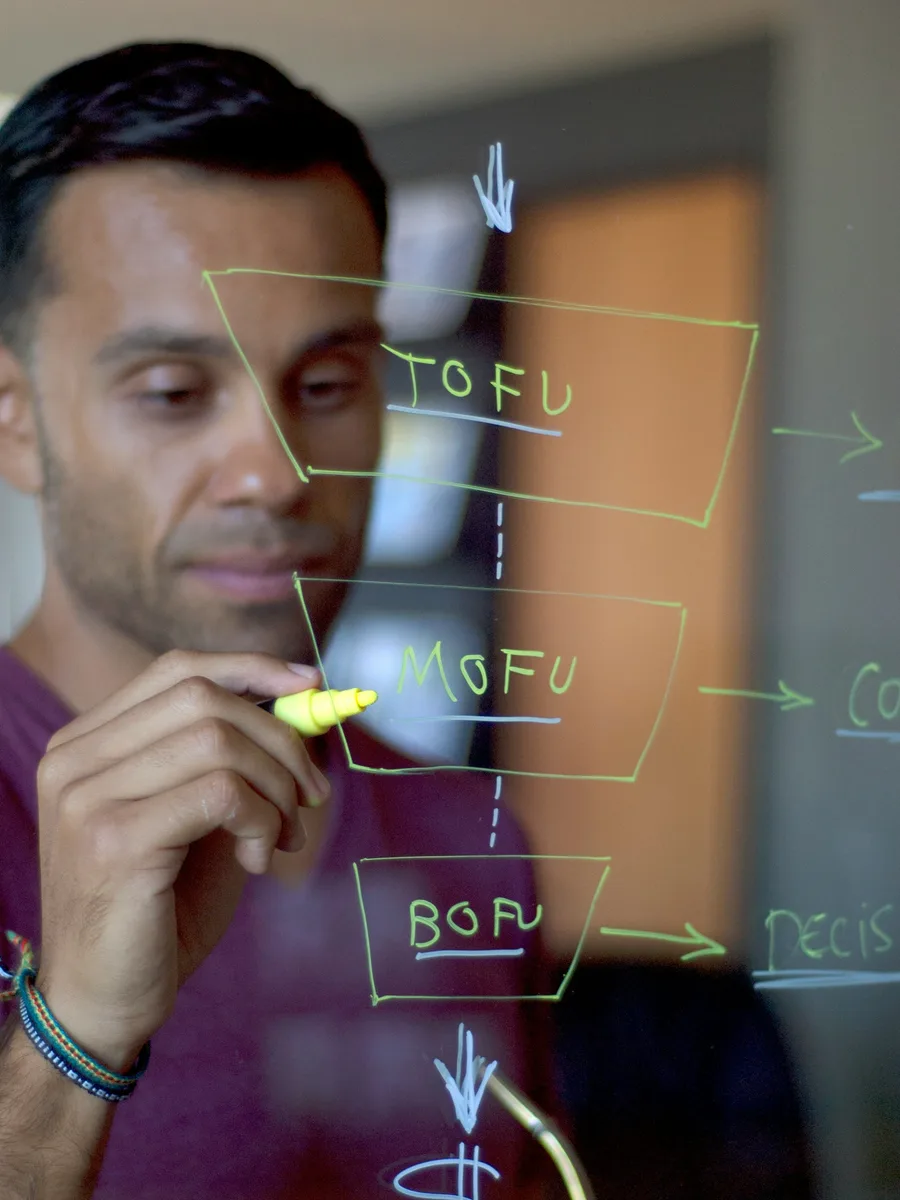
This is why online and offline content cannot be treated as separate campaigns. Offline builds the awareness; online closes the decision. When the two are coordinated so that wording, design, and branding match across both, the handoff is seamless and far more patients complete the journey from impression to appointment.
"The share of Americans who go online has grown steadily for two decades — today the vast majority of U.S. adults use the internet, and a growing share say they are online 'almost constantly.'"

Select a marketing channel below to see what its offline role contributes and what your online presence must do to convert that interest into booked patients.
Key Pattern: In every channel, offline builds awareness and trust in the community, while online captures intent, answers questions, and converts. Each offline asset should point to its online counterpart.
Online and offline marketing are not competing budgets. They are complementary weights that, balanced and coordinated, create a patient acquisition system greater than either alone.
The strongest patient acquisition comes from both sides in balance, with offline routing people to a high-converting online presence.
The gap between offline-only marketing and an integrated strategy is not cosmetic. It directly affects how many people who notice your practice ever actually book — because in healthcare, the decision happens online, on the website, reviews, and search results your offline content sends them to.
Vigorant Website Design & CRO →Each of these risks comes from treating online and offline as separate efforts. They quietly waste budget and lose patients in the gap between channels.

The practices winning the most new patients in 2026 have stopped choosing between online and offline. They run one integrated, brand-consistent system where each channel does what it does best.
"Brands that deliver a consistent, integrated experience across every channel a customer touches build deeper trust and capture more demand than those that treat each channel in isolation."

One of the most significant shifts in patient behavior over the last 18 months is the movement of initial provider searches from conventional Google results to AI-generated answers.
Patients increasingly ask ChatGPT, Google Gemini, Perplexity, Microsoft Copilot, and Claude for healthcare provider recommendations. These systems favor practices with strong, consistent signals — and a well-coordinated online and offline strategy quietly feeds those signals. Offline marketing that drives branded searches, reviews, and consistent business citations strengthens exactly the authority and trust cues AI assistants rely on.
The practices that win the most new patients in 2026 run online and offline as one integrated strategy — not as competing line items in the budget.
For dental, medical, and chiropractic practices, the decision to book happens online. Offline content builds the awareness; your website, reviews, and search presence close it. Coordinate the two and every impression works harder.
Vigorant is a healthcare-exclusive growth marketing agency. We build integrated, brand-consistent marketing systems where offline drives awareness and a high-converting website turns it into measurable growth.
Practical answers for dental, medical, and chiropractic practice owners on combining online and offline marketing into one effective strategy.
Neither one alone. The strongest patient acquisition comes from combining both so they reinforce each other. Offline assets — signage, brochures, business cards, community events, direct mail — build local familiarity and trust. Online assets — your website, Google Business Profile, reviews, and content — let prospective patients research, verify, and book. The most effective practices use offline touchpoints to drive people online, where the decision to book actually happens, and keep branding identical across both so the experience feels like one practice.
Offline marketing still drives real results for local practices: professionally designed brochures and flyers in the waiting room and referral offices, business cards, exterior signage, sponsorships and booths at local health fairs and community events, direct mail to nearby ZIP codes, and printed appointment reminders. The key is that every offline item should display your website address, Google Business Profile, and social handles so it points prospective patients toward your online presence, where they can read reviews and book.
Put a clear call to action and your web address on every physical asset — brochures, cards, banners, mailers, and event signage. Use short, memorable URLs or QR codes that link to a specific landing page rather than just the homepage, so you can measure which offline campaigns send traffic. Track those visits with UTM parameters and call tracking, and make sure the landing page they reach continues the same message and design they saw offline. Consistency between the printed piece and the page reduces drop-off and builds trust.
Prospective patients form trust through repeated, recognizable exposure. When your logo, colors, photography style, tone, and messaging match across a brochure, a billboard, your website, and your social profiles, each touchpoint reinforces the last and the practice feels established and credible. Inconsistent branding does the opposite — it fragments recognition and can make a single practice feel like several unrelated businesses, which erodes the trust that drives appointment bookings.
No. Print and other offline channels are not dead — they are most effective when integrated with digital. For local healthcare practices, physical presence in the community still generates awareness and referrals that purely digital campaigns miss. The mistake is treating print as a standalone channel. High-quality printed materials that route people to a strong website, reviews, and online booking outperform either channel used in isolation.
Because offline marketing ultimately drives people online or to the phone, you can measure most of it through the digital and intake systems patients land in. Use unique URLs, QR codes, and UTM-tagged landing pages for each printed campaign, dedicated call-tracking numbers on print pieces, and a simple 'How did you hear about us?' question at intake. Tie those signals back to booked appointments in your CRM so you can compare cost per new patient across both offline and online sources.
Start online with the asset every other channel points to: a fast, professionally designed, conversion-focused website plus a fully optimized Google Business Profile and a steady review flow. Once that foundation is in place, add targeted offline efforts — branded signage, brochures for referral partners, and presence at a few local events — all routing back to the website. A free marketing audit can identify the single highest-impact gap to fix first so a limited budget is not spread too thin.
Indirectly, yes. AI assistants like ChatGPT, Google Gemini, Perplexity, Microsoft Copilot, and Claude favor practices with strong, consistent signals — an authoritative website, structured content, accurate business listings, and a healthy volume of reviews. Offline marketing that drives people to your website and review platforms increases those signals: more branded searches, more reviews, and more consistent citations across the web. Pairing that with structured, well-cited online content makes your practice more likely to be surfaced and recommended by AI search tools.