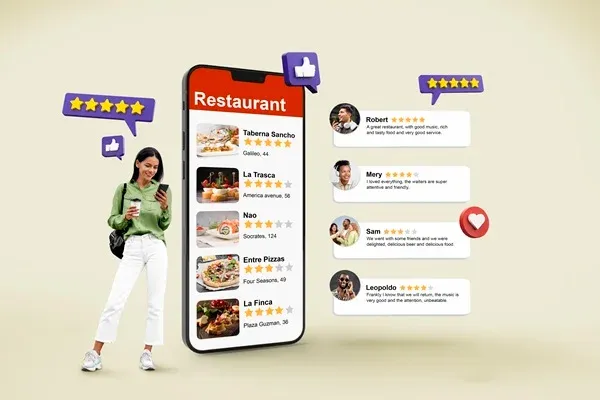
Importance of Social Media Crisis Management and Reputation Management
    Social Media + Reputation Management

    Why Social Media Crisis Management and Reputation Management Are Essential for Every Brand

    In a world where a single post can go viral overnight, your brand's online reputation is its most valuable — and most vulnerable — asset. Here is how to protect it, manage it, and make it work for you.

    Vigorant Social Media Marketing Team·March 2025·10 min read
    ● Proactive Brand Monitoring● Crisis-Ready Strategy● Trust-First Approach
    0%
    Consumers Read Reviews
    before making a purchase decision (BrightLocal 2024)
    0%
    Brands Experienced
    a social media crisis in the past year (Sprout Social 2024)
    0%
    Consumers Trust
    online reviews as much as personal recommendations
    0x
    Faster Spread
    negative content travels faster than positive online
    0%
    Consumers Avoid
    brands with unresolved negative reviews
    Data: BrightLocal 2024 · Sprout Social 2024 · Pew Research Center
    THE OPPORTUNITY

    Your Brand's Social Media Reputation Is Not Just Important — It Is Make-or-Break

    Social media has fundamentally changed the relationship between brands and their audiences. Customers no longer rely solely on advertising to form opinions about a business — they turn to reviews, comments, social mentions, and peer recommendations. What people say about your brand online shapes how new customers perceive you before they ever interact with you directly.

    Social media reputation management is the discipline of actively monitoring, shaping, and protecting that perception. It covers everything from how you respond to a one-star review on Google to how quickly your team addresses a viral complaint on X (Twitter). Brands that invest in proactive reputation management build trust faster, recover from setbacks more effectively, and create the kind of loyal customer base that sustains long-term growth.

    "Online reputation is one of the most significant factors influencing consumer trust and purchasing decisions. Brands that actively manage their digital presence and respond to customer feedback consistently outperform those that do not."

    — Pew Research Center, Internet & Technology Research

    Social media reputation management dashboard showing brand mentions and sentimentBrand team sharing positive customer reviews on social media platforms
    ● 7 Reputation Strategies

    7 Ways to Protect and Strengthen Your Brand's Social Media Reputation

    Each of these strategies is in active use by brands that consistently earn and maintain consumer trust online.

    01

    Define Your Desired Brand Reputation

    Before you can manage your reputation, you need to know what reputation you are building toward. Start by defining your brand's core values, understanding your target audience deeply, and setting clear, measurable reputation goals — for example, achieving 90% positive sentiment in customer feedback within 12 months. Use surveys, social media insights, and direct customer conversations to learn what resonates with your audience. A clearly defined brand identity gives your entire team a north star for every piece of content, every response, and every public interaction.

    Brand values definitionAudience researchReputation goal-settingBrand identity alignment

    Reputation goals should be specific and measurable. Vague aspirations like 'be seen as trustworthy' are less actionable than 'achieve a 4.5-star average rating across all review platforms within 12 months.'

    Brand strategy team defining reputation goals and audience values
    02

    Choose the Right Platforms and Show Up Consistently

    Not every social media platform will be equally relevant to your brand. Identify where your target audience is most active — whether that is Instagram, Facebook, LinkedIn, X (Twitter), or TikTok — and prioritise those channels. Showing up consistently on the right platforms is far more effective than spreading yourself thin across every network. Each platform has its own content norms, audience demographics, and engagement patterns. Tailor your presence accordingly and maintain a regular posting cadence to stay visible and relevant.

    Platform audience analysisConsistent posting cadenceChannel-specific contentAudience demographics
    Social media platform selection and content strategy planning
    03

    Post Strategic, Relevant Content Consistently

    Your content is the foundation of your social media reputation. Regularly publishing a thoughtful mix of content — educational posts, behind-the-scenes stories, customer spotlights, special offers, and user-generated content — keeps your audience engaged and reinforces your brand's personality. Use a content calendar to plan ahead, maintain consistency, and ensure you cover a variety of topics and formats. Experiment with blogs, infographics, short-form videos, and carousels to appeal to different audience preferences. Track engagement metrics to understand what resonates and refine your approach over time.

    Content calendar planningMixed content formatsUser-generated contentEngagement tracking
    Content creator planning social media posts using a content calendar
    04

    Prioritise Reviews Over Vanity Metrics

    Likes and follower counts are easy to chase, but they are not the most meaningful indicators of brand reputation. Customer reviews on Google, Yelp, Facebook, and industry-specific directories carry far more weight with potential customers than social media engagement numbers. Actively encourage satisfied customers to leave reviews after positive interactions. Make the process easy by sharing direct links to your review profiles. A strong, authentic review portfolio builds the kind of social proof that influences purchasing decisions more effectively than any paid advertisement.

    Review generation strategyGoogle ReviewsYelp managementSocial proof building
    Five-star customer reviews displayed on a brand's Google Business profile
    05

    Amplify Your Best Reviews and Testimonials

    If your brand is earning five-star ratings and glowing testimonials, do not keep them hidden on a review platform. Share your best customer feedback across your social media channels, feature it in blog posts, and highlight it on your website. Positive reviews act as powerful social proof that influences potential customers far more effectively than promotional content. Sharing authentic customer experiences also drowns out negative noise and continuously reinforces your brand's credibility. Let your happiest customers become your most persuasive advocates.

    Explore Vigorant's Web Design Service
    Brand website showcasing customer testimonials and five-star reviews
    06

    Use Social Listening Tools to Monitor Your Brand

    Tracking every conversation about your brand across multiple social media channels, review sites, and online directories is impossible to do manually at scale. Social listening tools — such as Hootsuite, Sprout Social, Brandwatch, and Mention — automate this process by monitoring brand mentions, hashtags, sentiment trends, and competitor activity in real time. These platforms help you identify emerging issues before they escalate, spot opportunities to engage positively, and gather actionable insights about how your audience perceives your brand. For businesses with multiple locations, social listening tools are especially valuable for maintaining a consistent reputation across all markets.

    Real-time brand monitoringSentiment analysisCompetitor trackingMulti-location management
    Social listening dashboard showing brand mentions and sentiment analysis
    07

    Develop and Activate a Crisis Communication Plan

    No brand is immune to social media crises. A product complaint that goes viral, a misunderstood post, a negative news story — any of these can escalate rapidly if your team is not prepared. A well-structured crisis communication plan defines who responds, how quickly, in what tone, and through which channels. Assign a dedicated response team, establish clear escalation protocols, and prepare pre-approved messaging templates for common crisis scenarios. When a crisis occurs, respond promptly, acknowledge concerns transparently, offer solutions, and — where appropriate — move sensitive conversations to private channels for more in-depth resolution. Speed, empathy, and accountability are the hallmarks of effective crisis management.

    Crisis response teamEscalation protocolsPre-approved messagingPrivate channel resolution
    Brand crisis management team reviewing social media response protocols
    PEW RESEARCH CENTER · INTERNET & TECHNOLOGY

    "Online reputation is not just a marketing concern — it is a business survival issue. Brands that fail to monitor and manage their digital presence risk losing customer trust at a speed that traditional recovery strategies cannot match."

    — Pew Research Center, Internet & Technology Research

    For research on consumer trust and online reputation, see the Pew Research Center's Internet & Technology studies linked in the footer of this page.

    Without Strategy vs. With Strategy

    Social Media Reputation Management: Reactive vs. Proactive

    See how a proactive reputation management strategy transforms every dimension of your brand's online presence.

    Hover or tap each card to flip

    WITHOUT STRATEGY

    Brand Monitoring

    Reactive — discovered after damage is done

    WITH STRATEGY ✦

    Brand Monitoring

    Proactive — real-time social listening alerts

    WITHOUT STRATEGY

    Review Management

    Ignored or inconsistently addressed

    WITH STRATEGY ✦

    Review Management

    Actively monitored and promptly responded to

    WITHOUT STRATEGY

    Crisis Response

    Slow, uncoordinated, and defensive

    WITH STRATEGY ✦

    Crisis Response

    Fast, empathetic, and protocol-driven

    WITHOUT STRATEGY

    Content Strategy

    Sporadic and unplanned posting

    WITH STRATEGY ✦

    Content Strategy

    Consistent, calendar-driven, audience-aligned

    WITHOUT STRATEGY

    Customer Feedback

    Ignored or seen as a threat

    WITH STRATEGY ✦

    Customer Feedback

    Analysed for insights and acted upon

    WITHOUT STRATEGY

    Negative Reviews

    Left unanswered or deleted

    WITH STRATEGY ✦

    Negative Reviews

    Addressed professionally with solutions offered

    WITHOUT STRATEGY

    Positive Reviews

    Collected but never amplified

    WITH STRATEGY ✦

    Positive Reviews

    Shared across channels as social proof

    WITHOUT STRATEGY

    Platform Presence

    Inconsistent across channels

    WITH STRATEGY ✦

    Platform Presence

    Unified brand voice across all platforms

    WITHOUT STRATEGY

    Audience Engagement

    Minimal and transactional

    WITH STRATEGY ✦

    Audience Engagement

    Consistent, authentic, and relationship-building

    WITHOUT STRATEGY

    Brand Trust

    Eroded by unmanaged perception

    WITH STRATEGY ✦

    Brand Trust

    Built systematically through transparency

    WITHOUT STRATEGY

    Long-Term Growth

    Undermined by reputation gaps

    WITH STRATEGY ✦

    Long-Term Growth

    Fuelled by credibility and customer loyalty

    Reputation management is not a one-time fix — it is an ongoing commitment. Brands that treat it as a continuous discipline rather than a crisis-only response consistently outperform competitors in customer trust, retention, and long-term revenue growth.

    Know the Limits

    What Automation Cannot Do in Reputation Management — The Human Boundary

    Understanding these limits helps brand owners make smarter decisions about where to invest in tools versus human expertise.

    Tools Cannot Replace Genuine Empathy

    Automated review response tools can draft replies, but they cannot replicate the genuine empathy and nuanced understanding that a real human brings to a sensitive customer complaint. Customers can tell the difference between a templated response and an authentic one — and the latter is what actually rebuilds trust.

    Automation Cannot Build Authentic Brand Stories

    The trust signals that convert a social media follower into a loyal customer — real team stories, genuine behind-the-scenes content, authentic community involvement — cannot be fabricated or fully automated. They require human creativity, judgment, and a deep understanding of your brand's identity.

    Monitoring Tools Cannot Make Strategic Decisions

    Social listening tools surface data and alerts, but deciding how to respond to a reputational crisis, which issues to escalate, and how to reposition your brand after a setback requires experienced human strategic judgment that no software can replicate.

    Algorithms Cannot Predict Every Crisis

    Sentiment analysis tools can flag negative trends, but they cannot anticipate every reputational risk — especially those arising from offline events, industry news, or cultural shifts. Human awareness, industry knowledge, and proactive scenario planning remain essential components of any robust crisis management strategy.

    "The most resilient brand reputations are built not by tools alone, but by the consistent human decisions that shape how a brand shows up for its customers every single day."

    — Pew Research Center, Internet & Technology Research

    AI Search Era

    GEO and AIO: How AI Search Is Changing Online Reputation Discovery

    In 2025 and beyond, a growing share of brand reputation searches begin on AI interfaces — not just Google's standard results page. Consumers type questions like 'Is [Brand] trustworthy?' or 'What do customers say about [Brand]?' into ChatGPT, Gemini, Perplexity, and Claude. Whether your brand is cited positively depends entirely on the quality, structure, and authority of your online content and reviews.

    🤖
    ChatGPT

    Conversational AI with 180M+ users. Consumers ask it for brand recommendations, reviews, and trustworthiness assessments by category and location.

    💎
    Google Gemini

    Integrated into Google Search. Powers AI Overviews that appear above organic results for brand and reputation queries.

    🔍
    Perplexity

    AI-native search engine rapidly adopted by younger consumers researching brands and reading aggregated reviews.

    🪟
    Microsoft Copilot

    Embedded in Bing and Microsoft 365. Handles brand reputation queries across enterprise and consumer contexts.

    🧠
    Claude

    Anthropic's AI assistant, increasingly used for nuanced brand research, competitor comparisons, and reputation assessments.

    What Makes Your Brand Citable and Credible in AI-Generated Answers
    Structured FAQ Content

    Directly answers the exact questions consumers ask AI assistants about your brand and industry

    Verified Brand Authorship

    Named authors, team bios, and verifiable brand credentials cited on content pages

    Schema.org Markup

    Organization, LocalBusiness, FAQPage, and Review entities correctly implemented

    Authoritative External Citations

    Links to credible, non-commercial sources that validate your brand's claims and expertise

    Topical Content Authority

    A consistent library of expert-level content in your industry that AI engines can index and cite

    Technical Website Performance

    Fast-loading, mobile-first, error-free website that AI crawlers can index completely and trust

    Vigorant's Approach

    Every Reputation Strategy in This Guide — Built Into Your Brand Marketing

    Vigorant is a growth marketing agency that helps businesses build, protect, and grow their online reputation. We apply proven social media marketing, content strategy, review management, and crisis communication frameworks — within a human-led strategy built specifically around your brand and your customers.

    Custom website design engineered for brand credibility and conversion

    Social media strategy with consistent content planning and audience engagement

    Proactive review management across Google, Yelp, Facebook, and industry directories

    Social listening and brand monitoring with real-time alert systems

    Crisis communication planning and rapid response protocol development

    Performance analytics with live dashboards and monthly strategy reviews

    Conversion-First·Brand-Aligned·Reputation-Focused·Human-Led Strategy
    FAQ

    Frequently Asked Questions

    Everything business owners and marketers need to know about social media reputation management, crisis communication, and building lasting brand trust.

    Social media reputation management is the ongoing process of monitoring, shaping, and maintaining how your brand is perceived across social platforms, review sites, and online directories. It involves tracking mentions and reviews, responding to customer feedback, posting strategic content, and using social listening tools to stay ahead of public sentiment. The goal is to build and protect a trustworthy, credible brand image that attracts and retains customers.

    READY TO GROW?

    The Brands Leading Their Markets Are Managing Their Reputation Proactively.

    Vigorant is a growth marketing agency helping businesses build credible, trusted brands online. We apply proven social media marketing, reputation management, and crisis communication strategies — within a human-led approach built for your brand, your audience, and your growth objectives.

    Brand-Aligned
    Reputation-Focused
    Human-Led Strategy
    Conversion-First