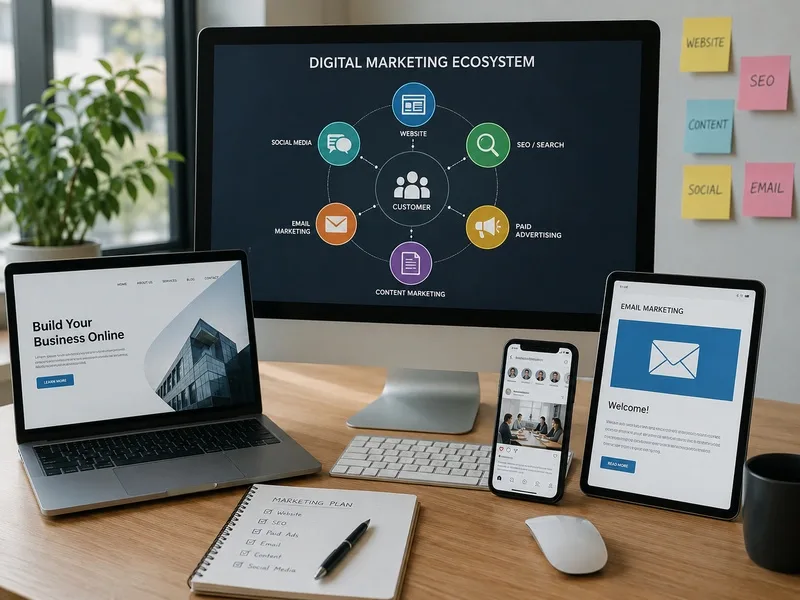
Healthcare Marketing

    DIY Digital Marketing vs. Hiring Experts: What Healthcare Practices Need to Know

    Google Ads, Meta, and local PPC platforms are built to be DIY. But for dental, medical, and chiropractic practices, the question of who manages your marketing has real consequences for budget, growth, and risk.

    Vigorant Healthcare Marketing TeamUpdated June 202610 min read
    Healthcare practice owner and marketing expert reviewing paid advertising campaign performance on a laptop
    • Published:July 19, 2021 · Updated June 24, 2026
    • Author:Vigorant Healthcare Marketing Team
    • Category:Healthcare Marketing · Paid Advertising · Agency Strategy
    The Real Question

    DIY or Delegate? Understanding What's Really at Stake

    Many of the most powerful advertising platforms — Google Ads, Microsoft (Bing) Ads, Meta, Yelp Ads, and local PPC networks — are deliberately designed to be do-it-yourself. A practice owner can open an account, type in a credit card, and have ads running in an afternoon. That accessibility is genuinely empowering. But it also creates a false impression that running profitable campaigns is as simple as turning them on.

    Defining the right campaigns, setting up job parameters, monitoring activity and performance, and allocating advertising budgets is work that rewards experience. The platforms optimize for their own revenue by default; without careful configuration of keywords, audiences, negative-keyword lists, and conversion tracking, healthcare practices routinely pay for clicks that never become patients.

    This is the core trade-off. DIY marketing gives you full control and avoids management fees, but it consumes your time and carries a steep learning curve. Hiring experts costs more upfront, yet it frees you to run the practice while specialists work to lower your cost per new patient. Neither answer is universally correct — and this guide will help you decide which fits your practice today.

    "Truthful, non-deceptive advertising is a legal requirement, not just good practice — and the responsibility sits with the advertiser, regardless of who builds the campaign."

    U.S. Federal Trade Commission, Advertising & Marketing Basics (ftc.gov)
    Marketing analytics dashboard showing paid advertising performance metrics for a healthcare practice
    The Upside of Going Solo

    Advantages of Doing Your Own Digital Marketing

    Where a DIY approach genuinely makes sense — especially for early-stage practices, tight budgets, or simple local campaigns.

    01

    No Management Fees

    The most obvious advantage is cost. Running campaigns yourself means every dollar goes to the platforms instead of an agency retainer. For a new solo practice spending a few hundred dollars a month on local ads, avoiding management fees can be the difference between advertising and not advertising at all.

    02

    Full Hands-On Control

    When you manage marketing in-house, you make every decision in real time — pausing a campaign, shifting budget to a high-performing service, or testing a new offer the moment you think of it. There is no waiting on a third party, and no translation loss between your goals and the person executing them.

    03

    Low Barrier to Entry

    Modern ad platforms are built for non-specialists. Guided setup wizards, suggested keywords, and automated bidding mean a motivated practice owner can launch a basic campaign quickly. For simple goals — promoting a single service or filling a slow afternoon — this accessibility is a real advantage.

    04

    Deep Knowledge of Your Patients

    No one understands your patients better than you and your front-desk team. That firsthand insight into the questions, objections, and language of your local community can make DIY ad copy surprisingly authentic — provided you have the time to translate it into well-structured campaigns.

    05

    Fast, Low-Stakes Experimentation

    DIY is ideal for small, low-risk tests: a seasonal promotion, a new service line, or a single landing page. You can launch quickly, learn what resonates locally, and use those findings to brief an expert later. Early experimentation builds intuition you will keep even after you scale up.

    Healthcare marketing team collaborating around a table reviewing campaign data
    Key Insight

    "In healthcare, wasted ad spend is not just lost money — it is lost patient appointments going to the competitor whose campaigns were built with more care."

    The Hidden Costs

    Disadvantages of DIY Digital Marketing for Healthcare Practices

    Where a do-it-yourself approach creates budget waste, compliance exposure, and missed-growth risks that practice owners often discover too late.

    Practice owner reviewing rising advertising costs and performance reports

    The Time Cost Is Easy to Underestimate

    Effective campaigns are never set-and-forget. They require ongoing bid adjustments, ad copy testing, budget pacing, and reporting. For a practice owner or office manager already wearing too many hats, the hours spent on marketing are hours not spent on patients, staff, and operations — and that opportunity cost rarely shows up on an invoice.

    Wasted Spend on Low-Intent Clicks

    Ad platforms default to broad reach because it spends budget faster. Without expert structure, much of your money flows to clicks that will never become patients.
    Missing negative-keyword listsBroad-match keyword bleedUntracked conversionsPoorly targeted audiencesNo landing-page alignmentWrong bidding strategy

    HIPAA and Tracking Compliance Gaps

    Healthcare advertising carries risks that general DIY guides never mention. Ad tracking pixels and analytics tags can inadvertently transmit protected health information, and platforms enforce health-specific ad policies that are easy to violate unintentionally.
    • Tracking pixels configured to avoid transmitting protected health information
    • Business Associate Agreements with vendors that touch patient data
    • Ad policy compliance for restricted healthcare categories
    • Privacy-safe conversion tracking and lead-form handling

    Marketing Is a Constantly Moving Target

    Digital marketing changes frequently. Platforms update bidding algorithms, ad formats, and policies; privacy rules shift; and new channels like AI search emerge. A DIY marketer must keep up with all of it on top of running a practice. Falling behind these changes quietly erodes performance long before anyone notices the leads have slowed.

    No Benchmarking or Strategic Perspective

    Working alone means you have no reference point. You cannot easily tell whether a $40 cost-per-lead is excellent or terrible for your specialty and market, because you only see your own account.

    "Truthful, non-deceptive advertising is a legal requirement, and substantiation for any claim must be in hand before the ad runs."

    U.S. Federal Trade Commission (FTC)

    Trying to Wear Too Many Hats

    The original lesson still holds: running a streamlined operation means specializing in what you do best and delegating the rest. Practice owners who try to be clinician, manager, and marketer simultaneously often find that the marketing — the part most directly tied to growth — is the first to be neglected when the schedule fills up.
    Head-to-Head

    DIY vs. Hiring Experts: The Complete Comparison

    How managing your own digital marketing compares to partnering with a specialized healthcare agency across the criteria that matter most for patient acquisition.

    CriteriaDIY / In-HouseDigital Marketing Experts
    Upfront CostLow — no management feeHigher — retainer or % of spend
    Time Required From YouHigh — several hours weeklyLow — handled for you
    Campaign Strategy DepthBasic; trial and errorData-driven, experience-led
    Ad Spend EfficiencyOften wasted on low intentOptimized for cost per patient
    HIPAA & Tracking SafetyEasy to misconfigureHIPAA-aware setup & review
    Conversion TrackingFrequently incompleteBuilt and validated properly
    Keeping Up With ChangesOn you, alongside the practiceContinuous specialist monitoring
    Benchmarking & InsightLimited to your own accountCross-practice benchmarks
    ReportingManual, time-consumingTransparent, lead-focused
    Control & FlexibilityTotal, immediate controlCollaborative; brief required
    ScalabilityLimited by your timeScales with budget & channels
    Best ForSmall budgets, simple goalsPractices focused on growth

    DIY marketing is a reasonable starting point for a small budget and simple goals. For healthcare practices with growth ambitions, expert-led management consistently improves the efficiency and reach of advertising spend — and frees the owner to focus on patient care.

    Decision Guide

    When DIY Makes Sense — and When You Need the Experts

    ✓ DIY Digital Marketing Makes Sense For:

    • A brand-new solo practice with a small monthly ad budget and time to learn
    • A single, simple campaign — one service, one offer, one local landing page
    • Early experimentation to validate demand before committing larger budgets
    • An owner who genuinely enjoys marketing and can protect the time each week

    ⚠ Expert Help Is Worth It When:

    • Your monthly ad budget is large enough that small efficiency gains exceed the fee
    • You compete in a dense local market where campaign depth decides who wins patients
    • Your campaigns collect patient data, where HIPAA-aware tracking is essential
    • Your website and ads are a primary new-patient acquisition channel
    • Your time is better spent on patient care than on bid adjustments and reporting
    Vigorant's Approach

    How Vigorant Manages Marketing That Drives Patient Growth

    Vigorant is a healthcare-exclusive growth agency. Our approach to paid advertising and digital marketing combines deep domain expertise with a disciplined, measurement-driven process engineered specifically for dental, medical, and chiropractic practices.

    • Campaign strategy built around qualified patient leads and cost per new patient — not vanity clicks

    • Expert account structure: keyword silos, audiences, and negative-keyword lists tuned for healthcare

    • HIPAA-aware conversion tracking and lead handling reviewed before campaigns go live

    • Continuous optimization — bid management, A/B testing, and budget pacing — by specialists

    • Transparent reporting tied to leads and return on ad spend, with full account ownership for you

    • AEO and GEO optimization so your practice surfaces in AI answers on ChatGPT, Gemini, Claude, and Perplexity

    Healthcare marketing agency team analyzing paid advertising performance reports for a dental practice
    AI Search Visibility

    The GEO / AIO Factor: Marketing Beyond the Ad Auction

    Digital marketing is no longer only about the paid ad auction. A fast-growing share of patients now begin their search inside AI assistants. When someone asks ChatGPT, Google Gemini, Perplexity, or Microsoft Copilot 'Who is a good dentist near me?', the assistant assembles its answer from web content it has indexed and judged authoritative. Generative Engine Optimization (GEO) is the practice of structuring your content so your practice is the one those tools recommend — a dimension most DIY advertisers never even consider.

    ChatGPTGoogle GeminiPerplexityMicrosoft CopilotClaude

    Clearly structured FAQ content with specific, authoritative answers

    Named clinical authors with verified credential information

    Schema.org markup identifying content type, publisher, and subject

    External citations from credible, institutional sources

    High domain authority built through consistent expert-level content

    DIY ad platforms do not address AI search at all. Visibility in generated answers is an advanced content and technical strategy that requires specialist implementation — and it is becoming a decisive competitive factor in healthcare markets.

    FAQ

    Frequently Asked Questions

    Everything healthcare practice owners need to know about DIY marketing, hiring experts, paid advertising costs, and compliance.

    DIY digital marketing appears cheaper because you avoid agency fees, but the true cost includes your time, the learning curve, and wasted ad spend from misconfigured campaigns. For many dental, medical, and chiropractic practices, an experienced agency lowers the cost-per-acquisition enough that the management fee pays for itself. The right answer depends on your budget, your available time, and how competitive your local market is.

    Ready to Grow?

    DIY Tools Are a Starting Point — Experts Are a Strategy.

    If your dental, medical, or chiropractic practice is ready to stop guessing and start growing — with paid advertising managed for qualified patient leads and measurable return — Vigorant is ready to help.

    • HIPAA-Aware Tracking
    • Healthcare-Exclusive Agency
    • Lead-Focused Reporting