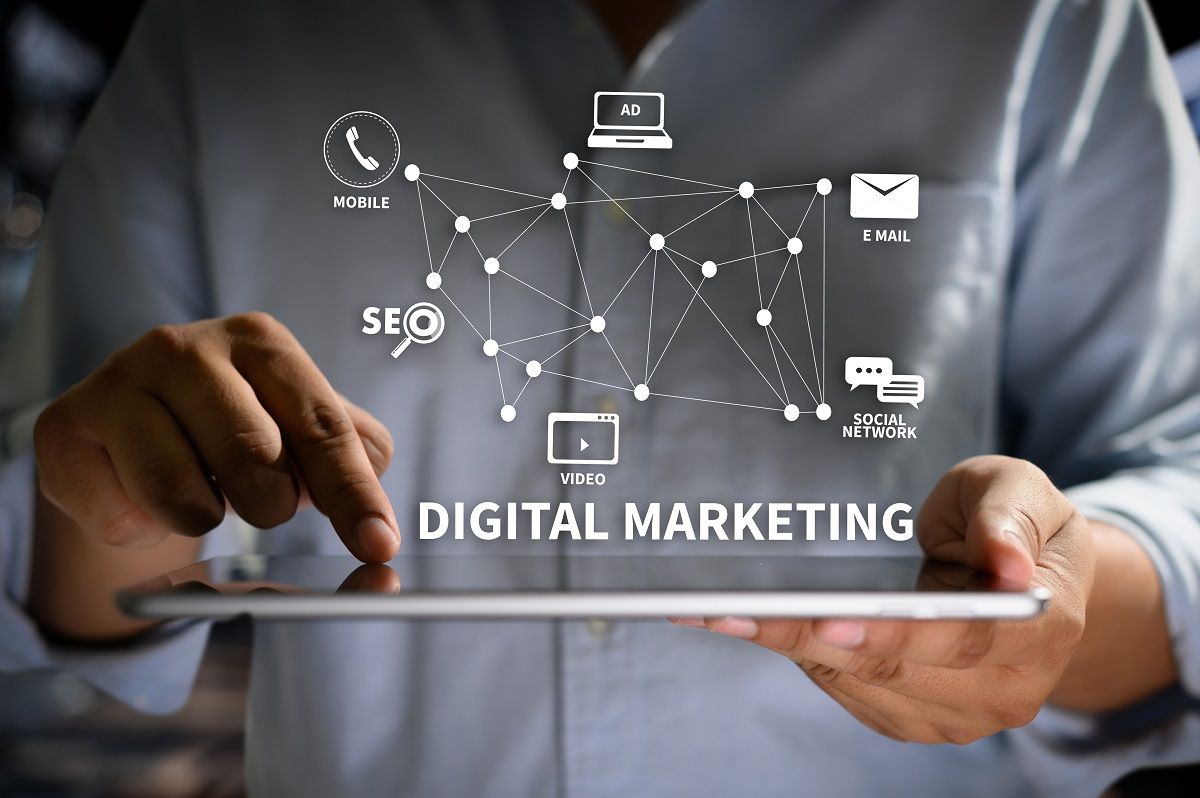
Every business faces the same question: where should you invest your digital marketing budget? Social media is powerful — but it is only one piece of a much larger puzzle. Here is how every major channel stacks up.

Technology has transformed how businesses reach their audiences. Digital marketing strategies — spanning social media, search engine optimisation, email, paid advertising, content marketing, and more — have helped companies of every size elevate their online presence, strengthen brand recognition, build customer loyalty, and ultimately drive sales.
Social media marketing has risen to particular prominence because billions of consumers spend significant time on platforms like Facebook, Instagram, LinkedIn, and TikTok every day. But social media is one channel within a much broader digital marketing ecosystem. Understanding the strengths and limitations of each technique is the foundation of any strategy that delivers consistent, measurable results.
"Digital marketing encompasses a wide range of online and offline channels — from social media and search engines to email and display advertising. The most effective strategies integrate multiple channels in a coordinated, data-driven approach rather than relying on any single platform."
— ScienceDirect, Digital Marketing and Social Media: A Survey (Elsevier, 2022)


Each of these channels plays a distinct role in a well-rounded digital marketing strategy. Understanding where each excels — and where it falls short — helps you invest wisely.
Social media marketing gives businesses direct access to billions of active users across Facebook, Instagram, LinkedIn, TikTok, and X. It excels at building brand awareness, fostering community, and enabling real-time two-way communication with customers. Analytics tools built into each platform allow marketers to track engagement, reach, and conversion performance at the campaign level. Organic content — posts, stories, reels, and videos — can be published at no cost, making social media accessible for businesses of all sizes.
Social media marketing requires consistent daily activity and platform-specific strategies. Negative public comments are visible to all followers and require proactive reputation management.


SEO is the practice of optimising your website and content to rank higher in search engine results pages for relevant queries. Unlike social media, SEO builds compounding long-term value — a well-optimised page can generate consistent organic traffic for years without ongoing ad spend. SEO encompasses technical website performance, on-page content quality, local search optimisation, and authoritative backlink building. For businesses targeting customers who are actively searching for their products or services, SEO is one of the highest-ROI digital marketing investments available.
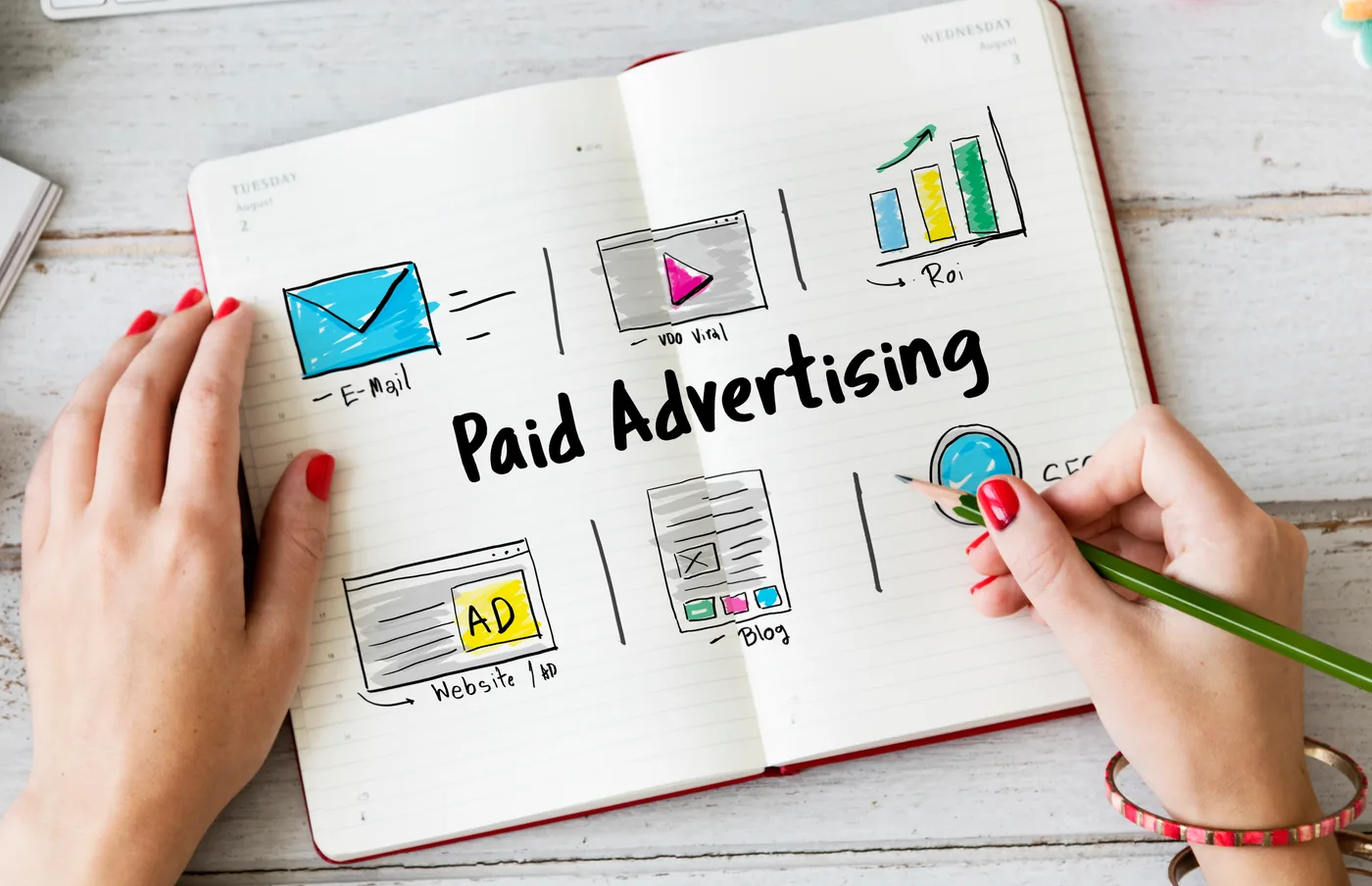
PPC advertising — including Google Ads, Microsoft Ads, and social media paid campaigns — delivers immediate visibility to precisely targeted audiences. Advertisers pay only when a user clicks their ad, making budget control straightforward. Modern AI-powered PPC platforms adjust bids in real time, dynamically assemble ad copy, and allocate spend across placements automatically. PPC is particularly effective for time-sensitive promotions, new product launches, and businesses that need immediate lead generation while longer-term SEO efforts mature.
PPC requires ongoing budget investment to maintain visibility. Results stop immediately when spend stops, unlike SEO which continues to deliver organic traffic after the initial investment.


Email marketing remains one of the most cost-effective digital marketing channels available. Because email reaches an owned, opted-in audience, it consistently delivers higher conversion rates than most social media channels. AI-powered email platforms enable automated welcome sequences, post-purchase follow-ups, re-engagement campaigns for inactive subscribers, personalised product or service recommendations, and seasonal promotional triggers. The primary challenge is list quality — a poorly maintained list with irrelevant content leads to high unsubscribe rates and spam complaints.
Content marketing — including blog posts, guides, videos, infographics, and podcasts — builds topical authority, supports SEO, and educates potential customers throughout the buying journey. High-quality content attracts organic search traffic, earns backlinks from other websites, and positions your brand as a trusted expert in your field. Content marketing works best as a long-term investment: the cumulative effect of a consistent publishing strategy compounds significantly over 12 to 24 months. A well-designed, conversion-optimised website is essential to turn content-driven traffic into leads and customers.
Explore Vigorant's Web Design Service →

Online reviews and reputation signals influence purchasing decisions across virtually every industry. Proactive reputation management involves monitoring review platforms in real time, responding to both positive and negative reviews promptly, and systematically requesting reviews from satisfied customers after positive interactions. Businesses with strong review profiles consistently outperform competitors in both organic search rankings and conversion rates. Reputation management is not a standalone channel — it amplifies the effectiveness of every other digital marketing investment by increasing the trust signals that convert visitors into customers.
The most powerful competitive advantage in digital marketing is not any single channel — it is the ability to measure, attribute, and optimise across all channels simultaneously. Modern analytics platforms track the full customer journey from first touchpoint to conversion, revealing which channels and campaigns are genuinely driving revenue versus which are consuming budget without return. Businesses that invest in proper analytics infrastructure make faster, better-informed decisions, allocate budget more efficiently, and compound their marketing performance over time in ways that single-channel competitors cannot match.

Social media marketing gives businesses direct access to billions of active users across Facebook, Instagram, LinkedIn, TikTok, and X. It excels at building brand awareness, fostering community, and enabling real-time two-way communication with customers. Analytics tools built into each platform allow marketers to track engagement, reach, and conversion performance at the campaign level. Organic content — posts, stories, reels, and videos — can be published at no cost, making social media accessible for businesses of all sizes.
Social media marketing requires consistent daily activity and platform-specific strategies. Negative public comments are visible to all followers and require proactive reputation management.

SEO is the practice of optimising your website and content to rank higher in search engine results pages for relevant queries. Unlike social media, SEO builds compounding long-term value — a well-optimised page can generate consistent organic traffic for years without ongoing ad spend. SEO encompasses technical website performance, on-page content quality, local search optimisation, and authoritative backlink building. For businesses targeting customers who are actively searching for their products or services, SEO is one of the highest-ROI digital marketing investments available.

PPC advertising — including Google Ads, Microsoft Ads, and social media paid campaigns — delivers immediate visibility to precisely targeted audiences. Advertisers pay only when a user clicks their ad, making budget control straightforward. Modern AI-powered PPC platforms adjust bids in real time, dynamically assemble ad copy, and allocate spend across placements automatically. PPC is particularly effective for time-sensitive promotions, new product launches, and businesses that need immediate lead generation while longer-term SEO efforts mature.
PPC requires ongoing budget investment to maintain visibility. Results stop immediately when spend stops, unlike SEO which continues to deliver organic traffic after the initial investment.

Email marketing remains one of the most cost-effective digital marketing channels available. Because email reaches an owned, opted-in audience, it consistently delivers higher conversion rates than most social media channels. AI-powered email platforms enable automated welcome sequences, post-purchase follow-ups, re-engagement campaigns for inactive subscribers, personalised product or service recommendations, and seasonal promotional triggers. The primary challenge is list quality — a poorly maintained list with irrelevant content leads to high unsubscribe rates and spam complaints.

Content marketing — including blog posts, guides, videos, infographics, and podcasts — builds topical authority, supports SEO, and educates potential customers throughout the buying journey. High-quality content attracts organic search traffic, earns backlinks from other websites, and positions your brand as a trusted expert in your field. Content marketing works best as a long-term investment: the cumulative effect of a consistent publishing strategy compounds significantly over 12 to 24 months. A well-designed, conversion-optimised website is essential to turn content-driven traffic into leads and customers.
Explore Vigorant's Web Design Service →
Online reviews and reputation signals influence purchasing decisions across virtually every industry. Proactive reputation management involves monitoring review platforms in real time, responding to both positive and negative reviews promptly, and systematically requesting reviews from satisfied customers after positive interactions. Businesses with strong review profiles consistently outperform competitors in both organic search rankings and conversion rates. Reputation management is not a standalone channel — it amplifies the effectiveness of every other digital marketing investment by increasing the trust signals that convert visitors into customers.

The most powerful competitive advantage in digital marketing is not any single channel — it is the ability to measure, attribute, and optimise across all channels simultaneously. Modern analytics platforms track the full customer journey from first touchpoint to conversion, revealing which channels and campaigns are genuinely driving revenue versus which are consuming budget without return. Businesses that invest in proper analytics infrastructure make faster, better-informed decisions, allocate budget more efficiently, and compound their marketing performance over time in ways that single-channel competitors cannot match.

"The most effective digital marketing strategies are not built on a single channel — they integrate social media, search, email, and content in a coordinated approach that meets customers wherever they are in their journey."
For peer-reviewed research on digital marketing and social media strategy, see the ScienceDirect study linked in the footer of this page.
See how a multi-channel digital marketing strategy changes outcomes compared to relying on social media alone.
Hover or tap each card to flip
Limited to platform followers
Search, email, social, and paid audiences combined
Platform-dependent, algorithm-driven
Owned organic, paid, and referral traffic
Broad awareness, lower intent
High-intent search and email leads
Posts expire within hours or days
SEO content drives traffic for years
Rented — platform controls access
Owned — email list and website traffic
Lower — awareness-stage audience
Higher — intent-matched channels
Organic reach declining without paid boost
Balanced organic and paid investment
Reactive — comments visible to all
Proactive — monitored across all platforms
Platform-level engagement metrics only
Full-funnel attribution across all channels
Relies on followers seeing posts
Email sequences and retargeting campaigns
Vulnerable to algorithm changes
Diversified — no single point of failure
Social media marketing is a powerful component of a digital strategy — but it is not a complete strategy on its own. Businesses that integrate social media with SEO, email, content marketing, and paid advertising consistently outperform those that rely on any single channel. The goal is not to choose between channels — it is to understand how each one contributes to your overall growth.
Understanding these limitations helps business owners make smarter channel investment decisions with realistic expectations.
Every follower you build on a social media platform belongs to that platform — not to you. Algorithm changes, policy updates, or platform decline can reduce your reach overnight. Businesses that rely exclusively on social media have no direct line to their audience when platforms change the rules. Email lists and SEO-driven website traffic are owned assets that no platform can take away.
Social media reaches people who are browsing and discovering — not necessarily people who are actively searching for what you offer. SEO and PPC capture high-intent demand from users who are already looking for your product or service. Relying solely on social media means missing the most conversion-ready segment of your potential audience.
Organic social media posts have a lifespan measured in hours. A well-optimised blog post or service page can generate consistent organic search traffic for years. Businesses that invest only in social media content are constantly on a content treadmill — the moment they stop posting, their visibility disappears. SEO and content marketing build durable, compounding digital assets.
Social media analytics show engagement and reach, but they rarely tell the complete story of how a customer moved from first awareness to final purchase. Multi-channel attribution — tracking the full customer journey across social, search, email, and direct — requires integrated analytics infrastructure that goes well beyond any single platform's native reporting tools.
"An integrated digital marketing strategy — combining social media with SEO, email, and content — consistently outperforms single-channel approaches in both reach and conversion."
In 2026, a growing share of product and service searches begin on AI interfaces — not Google's standard results page. Consumers type questions into ChatGPT, Gemini, Perplexity, and Claude. Whether your business is cited in those AI-generated answers depends entirely on the structural authority and quality of your digital content.
Directly answers the exact questions consumers ask AI assistants about your products or services
Verifiable author profiles and organisational affiliations cited on content pages
Organization, LocalBusiness, FAQPage, and Article entities correctly implemented
Links to peer-reviewed, government, or institutional sources that validate your content claims
Broad, consistent library of expert-level content covering your industry and service areas in depth
Fast-loading, mobile-first, error-free website that AI crawlers can index completely and accurately

Vigorant is a growth marketing agency that builds integrated digital strategies combining website design, SEO, paid advertising, content marketing, email, and reputation management — all coordinated around your specific business goals and target audience.
Custom websites engineered for conversion, SEO performance, and brand authority
Multi-channel SEO with AEO and GEO optimisation for AI search platforms
AI-optimised paid advertising across Google, Meta, and programmatic channels
Email marketing automation — acquisition sequences and retention campaigns
Proactive online reputation management across all major review platforms
Full-funnel analytics with live dashboards and monthly strategy reviews
Everything business owners need to know about social media marketing, digital marketing channels, and building a strategy that delivers measurable results.
Social media marketing focuses exclusively on platforms like Facebook, Instagram, LinkedIn, and TikTok to build brand awareness, engage audiences, and drive conversions through organic and paid content. Other digital marketing techniques — including SEO, email marketing, PPC, content marketing, and affiliate advertising — operate across a broader range of online and offline channels. Social media marketing excels at community building and direct customer interaction, while other techniques often deliver stronger long-term search visibility, lead nurturing, and multi-channel reach.
Neither is universally better — they serve different purposes and work best together. Social media marketing builds brand awareness, drives engagement, and generates immediate visibility, but results can be short-lived and platform-dependent. SEO builds long-term organic search visibility that compounds over time and delivers consistent inbound traffic without ongoing ad spend. Most successful businesses use both: SEO for sustainable discovery and social media for community engagement and brand amplification.
The main disadvantages of social media marketing include the significant time investment required to stay active and consistent, the risk of negative public comments that are visible to all followers, the need for platform-specific strategies across multiple networks, algorithm changes that can reduce organic reach without warning, and the limitation of being confined to social platforms rather than owning your audience directly. Businesses relying solely on social media also face the risk of losing access to their audience if a platform changes its policies or declines in popularity.
Email marketing typically delivers a higher return on investment than social media marketing because it reaches an owned audience — people who have explicitly opted in to hear from your brand. Email allows deep personalisation, segmentation, and automation. However, it requires a quality subscriber list and risks being ignored or marked as spam if content is irrelevant or too frequent. Social media reaches a broader, less committed audience but enables real-time interaction and viral sharing that email cannot replicate.
Conversion rates vary significantly by industry, audience, and campaign quality. Email marketing consistently ranks among the highest-converting channels due to its personalised, permission-based nature. SEO-driven organic traffic also converts well because users are actively searching for solutions. PPC advertising can deliver strong conversion rates when campaigns are well-targeted and landing pages are optimised. Social media marketing typically generates lower direct conversion rates but plays a critical role in the awareness and consideration stages of the buyer journey.
Absolutely. Small businesses often see strong returns from local SEO, which helps them appear in Google searches for nearby customers without large ad budgets. Email marketing is cost-effective and builds direct relationships with existing customers. Content marketing establishes authority and drives organic traffic over time. PPC advertising allows precise budget control and immediate visibility. Small businesses do not need to be on every channel — the key is identifying which two or three techniques align best with their audience, goals, and available resources.
Start by defining your business goals — brand awareness, lead generation, customer retention, or direct sales. Then identify where your target audience spends time online and what stage of the buying journey they are in when they encounter your brand. Businesses targeting younger, visually-driven audiences may prioritise Instagram or TikTok. B2B companies often find LinkedIn and email marketing more effective. Service businesses benefit strongly from local SEO and Google Ads. A balanced digital marketing strategy typically combines social media for awareness, SEO for long-term discovery, email for retention, and paid advertising for immediate lead generation.
Yes — your website is the foundation of your entire digital marketing strategy. Social media profiles are rented platforms where algorithms, policies, and audience access can change at any time. Your website is an owned asset that you fully control. It is where SEO drives organic traffic, where PPC ads send paid visitors, where email campaigns direct subscribers, and where social media followers convert into customers or leads. A high-performing, conversion-optimised website amplifies the results of every other digital marketing channel you invest in.
Vigorant is a growth marketing agency helping businesses build integrated digital strategies that combine social media, SEO, paid advertising, email, and conversion-optimised website design — all coordinated around your goals and your audience.