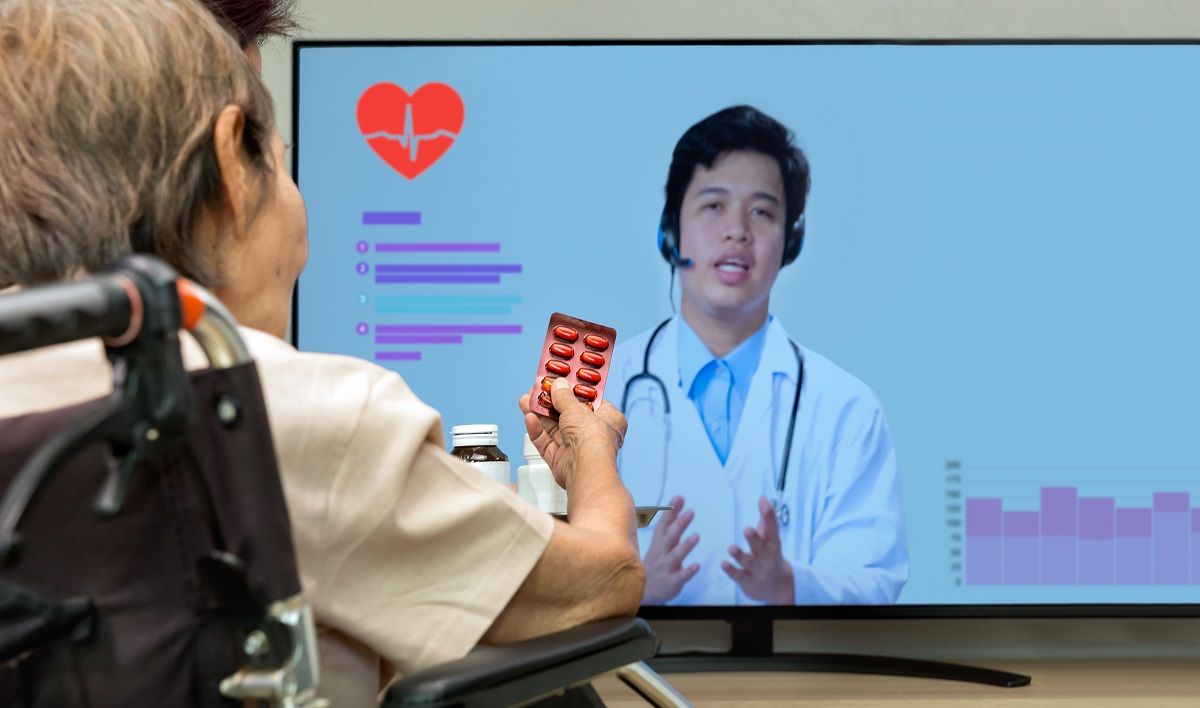
Patients choose their doctor before they ever walk through the door. Video marketing gives medical doctors the most powerful tool available to make that first impression count — and turn online visitors into booked appointments.

When a prospective patient searches for a doctor online, they are not just looking for credentials — they are looking for someone they can trust. A text-heavy bio page and a list of qualifications can communicate competence, but they cannot communicate warmth, empathy, or personality. Video can do all three in under two minutes.
Medical doctors who invest in video marketing gain a decisive advantage: patients can see, hear, and interpret non-verbal communication before they ever book an appointment. In a healthcare market where patient choice is driven by trust and familiarity, video is the most effective tool available for building both — and for promoting modern care options like telehealth that patients are increasingly seeking.
"Telehealth has rapidly expanded access to care and changed how patients engage with their healthcare providers. Digital communication tools — including video — are now central to how patients evaluate and connect with medical professionals."
— U.S. Department of Health and Human Services, Telehealth.gov


Each of these strategies is proven to build patient trust, increase appointment bookings, and strengthen your practice's online presence.
A warm, professionally produced welcome video is one of the highest-impact investments a medical doctor can make in their online presence. Patients who are anxious about visiting a new doctor — or considering a telehealth appointment for the first time — respond powerfully to a video that introduces the practice, the team, and the environment. A virtual tour of your facilities removes uncertainty and helps patients know exactly what to expect when they arrive. Welcome videos reduce no-show rates, increase first-appointment conversions, and set the tone for a long-term patient relationship built on comfort and confidence.
Keep welcome videos between 60 and 90 seconds. Authenticity matters more than production perfection — patients respond to genuine warmth.


Today's patients research their doctors online before booking. They want to understand not just a doctor's qualifications, but their personality, communication style, and approach to patient care. An intro profile video — featuring the doctor speaking directly to the camera about their background, philosophy, and what patients can expect — creates a powerful sense of familiarity and trust. When patients can see a doctor on screen before their first appointment, they are significantly more likely to view that doctor as approachable, trustworthy, and worth choosing over a competitor whose online presence is limited to a static headshot and a CV. Practices with multiple physicians should create individual profile videos for each doctor to personalise the experience further.
Educational video content is one of the most effective ways for medical doctors to demonstrate clinical expertise while providing genuine value to current and prospective patients. Videos explaining common procedures, treatment options, preventive care guidance, and condition management help patients feel informed and empowered — and position the doctor as a trusted authority in their specialty. Educational videos can take the form of animated explainers, real-time procedure walkthroughs, or direct-to-camera Q&A sessions. They are particularly effective for addressing the questions patients are most likely to search for online, making them a powerful driver of organic search traffic and AI-generated answer citations. All educational video content should be reviewed for clinical accuracy before publication to meet YMYL and E-E-A-T standards.
Educational videos that directly answer common patient questions are more likely to be cited by AI assistants like ChatGPT, Google Gemini, and Perplexity when patients search for healthcare information.


In healthcare marketing, social proof is one of the most powerful conversion drivers available. Patient testimonial videos — featuring real patients sharing honest, specific accounts of their experience — carry far more persuasive weight than written reviews alone. Prospective patients watching a testimonial video can evaluate the authenticity of the experience, the emotional outcome of the care, and the quality of the doctor-patient relationship in a way that text cannot convey. Practices should encourage satisfied patients to share their stories on camera, always with proper written consent obtained in advance. Testimonial videos should be published on the practice website, Google Business Profile, YouTube, and social media channels. Doctors should also respond to all reviews — positive and negative — to demonstrate engagement and accountability. When executed correctly, patient testimonial videos are consistently among the highest-performing assets in a medical practice's marketing library.
A warm, professionally produced welcome video is one of the highest-impact investments a medical doctor can make in their online presence. Patients who are anxious about visiting a new doctor — or considering a telehealth appointment for the first time — respond powerfully to a video that introduces the practice, the team, and the environment. A virtual tour of your facilities removes uncertainty and helps patients know exactly what to expect when they arrive. Welcome videos reduce no-show rates, increase first-appointment conversions, and set the tone for a long-term patient relationship built on comfort and confidence.
Keep welcome videos between 60 and 90 seconds. Authenticity matters more than production perfection — patients respond to genuine warmth.

Today's patients research their doctors online before booking. They want to understand not just a doctor's qualifications, but their personality, communication style, and approach to patient care. An intro profile video — featuring the doctor speaking directly to the camera about their background, philosophy, and what patients can expect — creates a powerful sense of familiarity and trust. When patients can see a doctor on screen before their first appointment, they are significantly more likely to view that doctor as approachable, trustworthy, and worth choosing over a competitor whose online presence is limited to a static headshot and a CV. Practices with multiple physicians should create individual profile videos for each doctor to personalise the experience further.

Educational video content is one of the most effective ways for medical doctors to demonstrate clinical expertise while providing genuine value to current and prospective patients. Videos explaining common procedures, treatment options, preventive care guidance, and condition management help patients feel informed and empowered — and position the doctor as a trusted authority in their specialty. Educational videos can take the form of animated explainers, real-time procedure walkthroughs, or direct-to-camera Q&A sessions. They are particularly effective for addressing the questions patients are most likely to search for online, making them a powerful driver of organic search traffic and AI-generated answer citations. All educational video content should be reviewed for clinical accuracy before publication to meet YMYL and E-E-A-T standards.
Educational videos that directly answer common patient questions are more likely to be cited by AI assistants like ChatGPT, Google Gemini, and Perplexity when patients search for healthcare information.

In healthcare marketing, social proof is one of the most powerful conversion drivers available. Patient testimonial videos — featuring real patients sharing honest, specific accounts of their experience — carry far more persuasive weight than written reviews alone. Prospective patients watching a testimonial video can evaluate the authenticity of the experience, the emotional outcome of the care, and the quality of the doctor-patient relationship in a way that text cannot convey. Practices should encourage satisfied patients to share their stories on camera, always with proper written consent obtained in advance. Testimonial videos should be published on the practice website, Google Business Profile, YouTube, and social media channels. Doctors should also respond to all reviews — positive and negative — to demonstrate engagement and accountability. When executed correctly, patient testimonial videos are consistently among the highest-performing assets in a medical practice's marketing library.

"Video is far superior to text or still images for educating patients and building the trust that drives healthcare decisions. Patients who watch a doctor on screen before their first visit are significantly more likely to book — and to stay."
For authoritative guidance on telehealth and digital patient engagement, see the U.S. Department of Health and Human Services resource linked in the footer of this page.
See how video marketing changes every dimension of patient acquisition and trust-building for medical doctors.
Hover or tap each card to flip
Static headshot and text bio
Personal, engaging video introduction
Built slowly over multiple visits
Established before the first appointment
Unknown until arrival
Virtual tour removes all uncertainty
Credentials listed in text
Shown through educational video content
Written text reviews only
Authentic video testimonials with emotional impact
Text description of virtual services
Video walkthrough of the telehealth experience
Text-only pages with limited engagement
Video content indexed by Google and YouTube
Low-engagement static posts
High-reach video content shared across platforms
Appointment reminders only
Ongoing educational video keeps patients engaged
Indistinguishable from other practices
Memorable, personality-driven video presence
Lower conversion from website visitors
Higher booking rate after video engagement
Video marketing does not replace the need for a strong healthcare website, SEO strategy, or patient communication plan. It amplifies all of them. The medical practices winning new patients in 2026 are combining compelling video content with a professionally designed, conversion-optimised website that turns viewers into booked appointments.
Understanding these limits helps medical doctors invest in video marketing with clear, realistic expectations.
Video marketing builds the trust that brings patients through the door — but it cannot substitute for the quality of care they receive once they arrive. A compelling video presence that does not reflect the actual patient experience will generate negative reviews and damage long-term reputation. Clinical excellence must underpin every marketing investment.
Patient testimonial videos require explicit written consent that complies with HIPAA-aware standards and applicable state regulations. No video production process automatically ensures this compliance. Every patient who appears in a marketing video must provide documented, informed consent before filming begins — and that consent must be retained on file.
Educational videos that contain clinical inaccuracies, outdated treatment protocols, or oversimplified medical explanations create patient safety risks and E-E-A-T deficits that harm search rankings. All educational video content must be reviewed and approved by a qualified clinician before publication. AI-assisted video scripts require the same clinical review standard.
Even the most compelling video content fails to reach its full conversion potential if it lives on a poorly designed, slow-loading, or mobile-unfriendly website. Video marketing and healthcare website design are interdependent — a professionally built, patient-acquisition-focused website is the foundation that makes video investment worthwhile.
"Digital communication tools — including video — are now central to how patients evaluate and connect with medical professionals before making care decisions."
In 2026, a growing share of healthcare provider searches begin on AI interfaces — not Google's standard results page. Patients ask ChatGPT, Gemini, Perplexity, and Claude questions like 'What should I expect from my first cardiology appointment?' or 'How does telehealth work for primary care?' Whether your practice is cited in those AI-generated answers depends on the authority and structure of your content — including the educational video content you publish and the supporting text that accompanies it.
Publishing full transcripts of educational videos as structured FAQ content helps AI assistants index and cite your answers
Verifiable doctor credentials and institutional affiliations cited alongside video content pages
VideoObject, Physician, and FAQPage schema entities correctly implemented on video content pages
Links to peer-reviewed or government health authority sources alongside educational video content
A consistent library of video and written content covering your specialty in depth builds AI citation authority
Fast-loading, mobile-first, error-free website with properly embedded video that AI crawlers can index completely

Vigorant is a healthcare-exclusive growth marketing agency. We help medical doctors build video marketing strategies that attract new patients, build lasting trust, and convert website visitors into booked appointments — all within a professionally designed, patient-acquisition-focused website built specifically for your practice.
Custom healthcare websites engineered to showcase and convert video content
Video marketing strategy tailored to your specialty and patient demographics
Educational video content planning with clinical accuracy review
Patient testimonial video guidance with consent-compliant workflows
SEO and AEO optimisation for video content across Google, YouTube, and AI platforms
Integrated reputation management across all major review and video platforms
Everything medical doctors need to know about video marketing, patient trust, and building a stronger online presence.
Video marketing allows medical doctors to connect with potential patients on a personal level before they ever step into the office. Patients can see, hear, and interpret a doctor's non-verbal communication through video — building trust and familiarity far faster than a text bio or a list of qualifications. In a competitive healthcare market, video content helps doctors stand out, attract new patients, and retain existing ones by demonstrating expertise, warmth, and professionalism.
Medical doctors should create four core types of marketing videos: welcome and practice tour videos that help new patients feel comfortable before their first visit; doctor intro profile videos that showcase personality, credentials, and approach to care; educational videos explaining procedures, conditions, and treatment options; and patient testimonial videos that build social proof and credibility. Each type serves a distinct role in the patient decision-making journey.
Video builds patient trust by allowing prospective patients to evaluate a doctor's communication style, empathy, and expertise before committing to an appointment. Seeing a doctor speak directly to the camera — explaining a procedure, welcoming new patients, or sharing their philosophy of care — creates a sense of familiarity and confidence that static text and images cannot replicate. Trust is the primary driver of patient choice in healthcare, and video is the most effective digital medium for establishing it.
Yes. Video marketing is especially powerful for promoting telehealth services because it demonstrates the virtual care experience directly. A short video explaining how a telehealth appointment works, what patients can expect, and how to prepare removes the uncertainty that prevents many patients from booking their first virtual visit. The U.S. Department of Health and Human Services recognises telehealth as a critical access point for modern care, and video content is the most effective way to introduce patients to this option.
Patient testimonial videos should feature real patients sharing honest, specific experiences about their care — including how the doctor made them feel, the outcome of their treatment, and why they would recommend the practice. Doctors should always obtain proper written consent before recording or publishing patient testimonials. These videos should be shared on the practice website, Google Business Profile, and social media channels. Responding to reviews — both positive and negative — alongside video testimonials reinforces a culture of transparency and patient-centred care.
Medical doctors should publish marketing videos across multiple platforms to maximise reach and patient engagement. The practice website is the highest-priority placement — particularly the homepage, About page, and service pages. YouTube is the second-largest search engine and an essential channel for healthcare video content. Social media platforms including Facebook, Instagram, and LinkedIn extend reach to different patient demographics. Videos embedded on a well-designed healthcare website also improve SEO performance and time-on-page metrics.
Video length should match the content type and platform. Welcome and intro profile videos perform best at 60 to 90 seconds — long enough to convey personality and warmth, short enough to hold attention. Educational videos explaining procedures or conditions can run two to four minutes when the topic warrants depth. Patient testimonial videos are most effective at 60 to 120 seconds. For social media, shorter clips of 30 to 60 seconds with captions tend to generate the highest engagement. Quality, clarity, and authenticity matter far more than production length.
A well-designed healthcare website is the foundation that makes video marketing effective. Videos embedded on a professionally built, fast-loading, mobile-optimised website are more likely to be watched, shared, and indexed by search engines. A healthcare website designed for patient acquisition — with clear calls to action, appointment booking integration, and trust-building design — converts video viewers into booked patients. Without a strong website, even excellent video content fails to reach its full conversion potential.
Vigorant is a healthcare-exclusive growth marketing agency serving medical, dental, and chiropractic practices across the United States. We build video marketing strategies and high-performance healthcare websites that turn patient interest into booked appointments — and booked appointments into long-term practice growth.