Jun 5, 2026

Healthcare Landing Pages vs Websites: What Works Better?
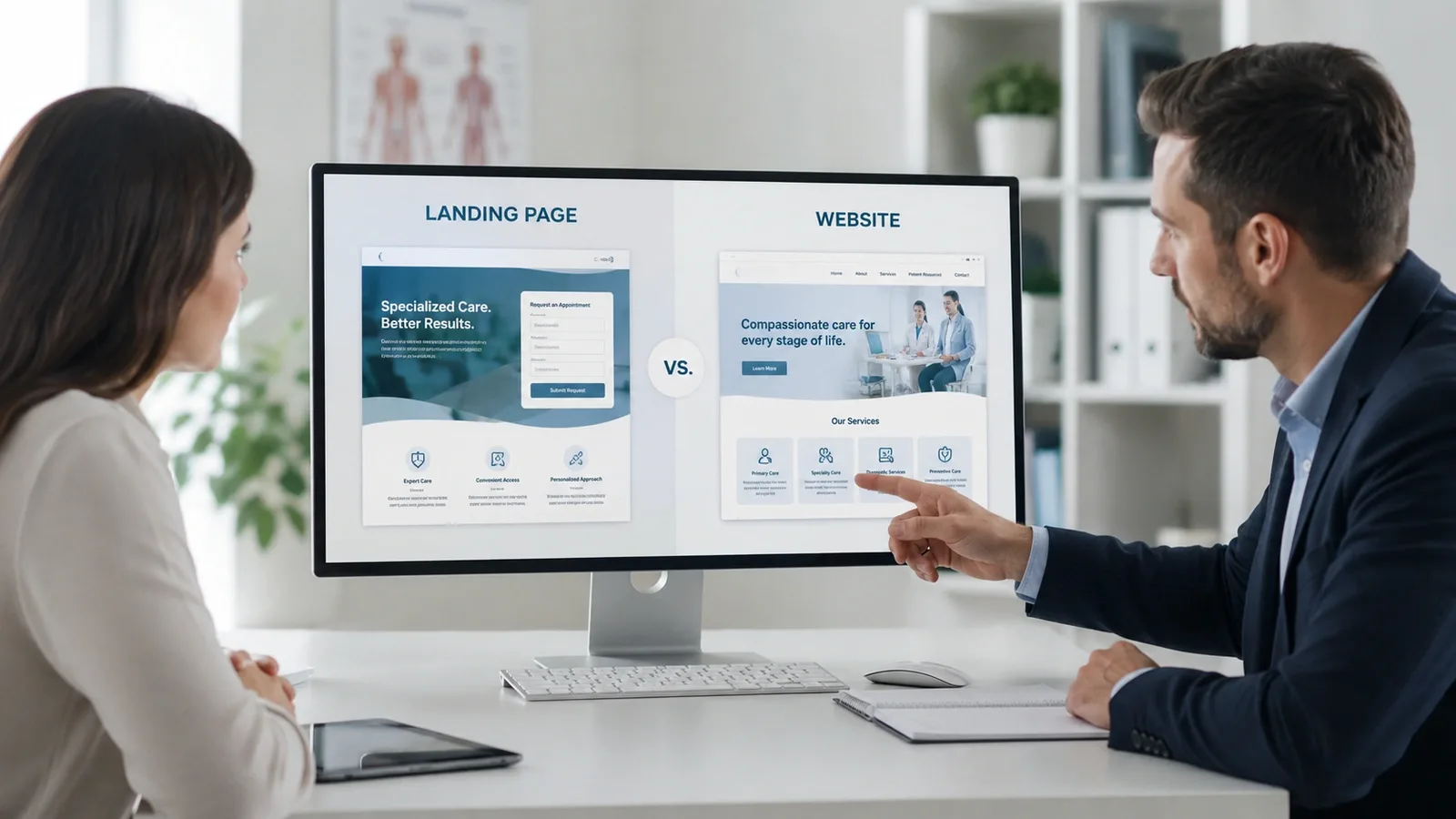
Healthcare practices often wonder whether a full website or a dedicated landing page works better for generating patient leads. The answer depends on the goal. A website helps patients understand your practice, services, providers, reviews, and location. A landing page is usually built for one campaign, one service, and one clear action, such as requesting an appointment, calling the office, or booking a consultation.
For dentists, doctors, clinic managers, and private practices, this decision matters because patient attention is limited. A visitor may come from Google Ads, SEO, social media, email, or an AI search result. If the page they land on is too broad, too slow, or confusing, they may leave before contacting your office. The right digital structure can turn patient interest into trust, and trust into measurable inquiries.
The Main Difference Between the Two Options
A website is designed for discovery, while a landing page is designed for conversion. Your website gives patients multiple paths to explore services, read about your team, check reviews, and understand your practice. It is important for SEO, local search, brand credibility, and AI visibility because it gives search engines and answer engines a broader understanding of your healthcare business.
A landing page is more direct. It is not trying to explain everything your practice offers. Instead, it focuses on one treatment, one audience, one location, or one campaign. This is useful when you are paying for traffic or promoting a specific service. For example, a dental practice may have a full website for general visibility, but use separate landing pages for implants, Invisalign, emergency dentistry, or cosmetic dentistry campaigns.

When Should You Use Each?
Use your healthcare website when the goal is long-term growth. A website is best for organic SEO, patient education, local authority, brand trust, and service visibility. It should include clear navigation, detailed service pages, helpful blog content, reviews, provider credentials, contact information, and strong location signals that help patients and search engines understand your practice.
Use a landing page when the goal is focused patient acquisition. If you are running paid ads, email campaigns, social media campaigns, or service-specific promotions, a landing page can improve message match and reduce friction. Vigorant’s Landing Pages Design service helps healthcare practices create focused pages that guide high-intent visitors toward calls, forms, and booked consultations.
Focused landing pages help healthcare practices turn specific patient intent into clearer, faster, and more measurable action.

Strengths of Landing Pages
Healthcare landing pages are powerful because they remove confusion. Instead of asking a patient to browse through several menu items, the page answers the most important questions related to one specific service. This makes the patient journey easier, especially for high-intent traffic coming from paid ads, local campaigns, or direct promotions.
A good landing page usually includes a clear headline, service-focused benefits, trust signals, provider credibility, location relevance, and a strong call-to-action. It should also load quickly, work smoothly on mobile, and make it easy for patients to call or submit a form. When designed correctly, landing pages help healthcare practices improve conversion rates and lead quality.
Strengths of Websites
A healthcare website gives your practice a complete digital presence. It supports long-term visibility, builds authority, and helps patients understand your full range of services. Google also emphasizes page experience signals such as loading performance, responsiveness, and visual stability, which means your healthcare website should be fast, mobile-friendly, and easy to use.
Key strengths include:
- Supports SEO growth through service pages, blogs, and local healthcare content.
- Helps patients compare services, providers, reviews, and practice information.
- Builds authority with credentials, education, testimonials, and location details.
- Improves AI visibility through structured, helpful, and entity-rich content.
Side by Side Comparison
| Feature | Healthcare Website | Healthcare Landing Page |
|---|---|---|
| Main Purpose | Builds the full digital presence of the practice | Converts focused traffic into patient inquiries |
| Patient Intent | Best for patients exploring and comparing options. | Best for patients looking for one specific service |
| Content Depth | Covers services, providers, locations, reviews, and resources. | Focuses on one service, offer, or patient need. |
| Navigation | Includes menus, multiple pages, and different user paths. | Uses limited navigation to reduce distractions. |
| SEO Value | Strong for organic rankings, blogs, and local search. | Useful for campaign relevance, but not the main SEO base. |
| Conversion Focus | Builds trust before patients decide. | Drives calls, forms, consultation requests, or bookings. |
| Main Risk | Can feel too broad for paid campaign traffic. | Can feel too thin without trust signals or details. |
| Best Strategy | Use as the foundation for visibility and authority. | Use as a focused tool for high-intent campaigns. |
How AI Search Changes This Decision
AI search is changing how patients discover healthcare practices. Tools like Google AI Overviews, ChatGPT search, Gemini, and Perplexity often summarize information from clear, structured, and trustworthy content. This means your website needs strong service pages, helpful explanations, FAQs, local relevance, and consistent practice information to support AI visibility.
Landing pages also need to become more useful. Thin campaign pages may get clicks, but they may not provide enough information for patients or AI systems to trust the content. The best strategy is to use both together. Your website should build authority and organic visibility, while your landing pages should convert focused traffic into patient inquiries. When both work together, your practice gains a stronger digital growth system.
Conclusion
Healthcare landing pages and websites both work, but they work best for different goals. A website is the foundation of your digital presence. It helps patients learn about your practice, compare services, check trust signals, read educational content, and find you through search. It also supports long-term SEO and AI visibility by giving search engines more context about your services, providers, locations, and expertise.
A landing page is the focused conversion tool. It is best for campaigns where the patient already has a specific need and needs a clear path to action. For healthcare business owners, the smarter question is not which one is better overall. The better question is which one fits the visitor’s intent. If the visitor is exploring, your website should educate and build trust. If the visitor clicked a specific ad or campaign, a landing page should guide them toward booking.
At Vigorant, we help healthcare practices build both high-converting landing pages and trust-focused websites designed around real patient behavior, helping clinics turn traffic into consistent patient growth.
Resource
FAQ
Still have a Question? Contact Us
Landing pages are better for focused campaigns, while websites are better for long-term visibility, education, and trust.
Yes. Dedicated landing pages improve message match, reduce distractions, and help campaign visitors take one clear action.
Yes. Dentists can use landing pages for implants, cosmetic dentistry, Invisalign, emergencies, and other high-intent services.
Yes, when they include clear messaging, mobile speed, strong CTAs, and service-specific content.
It should include one clear service, trust signals, provider credibility, contact options, privacy reassurance, and a strong CTA.
Learn more about digital marketing in your field through our blogs