Website Design & Development

    How Dentists Can Use Landing Pages to Book More Patients

    A great website alone rarely fills the schedule. For dental practices, focused landing pages turn clicks from Google, ads, and social into actual appointment requests — but only when they are built the right way.

    Vigorant Healthcare Marketing TeamMay 202610 min read
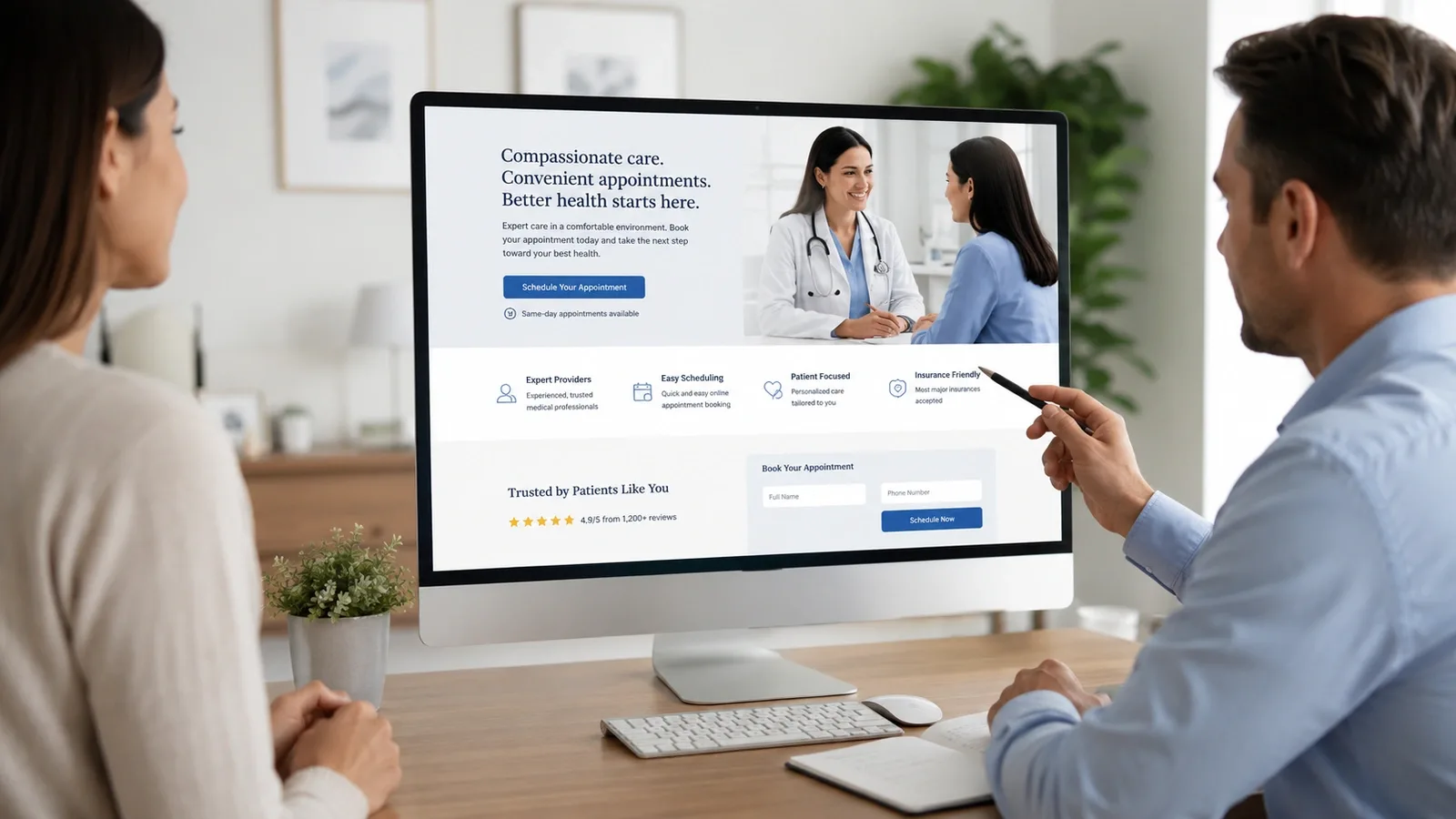
    Dental practice owner reviewing a high-converting landing page on a laptop
    • Published:May 19, 2026
    • Author:Vigorant Healthcare Marketing Team
    • Category:Website Design & Development · Conversion Optimization
    The Problem Explained

    Why Traffic Alone Does Not Fill a Dental Schedule

    Dental practices today compete in crowded local search results, Google Ads auctions, and social feeds. Simply having a website is no longer enough to attract and convert new patients. Many clinics spend heavily on dental SEO and advertising yet struggle to turn visitors into booked appointments — usually because those visitors land on pages that are confusing, slow, or not designed to guide one clear action.

    Modern patients expect convenience, speed, and a sense of trust before they ever pick up the phone. A landing page is a single, purpose-built page focused on one service and one goal, such as requesting an implant consultation or booking an Invisalign assessment. By removing competing links and extra navigation, a landing page shortens the path from interest to appointment request.

    This is the core difference between a landing page and a homepage. A homepage introduces the whole practice to every possible visitor, while a landing page answers one specific intent and moves that visitor toward booking. Used together, they let a practice capture both broad discovery and high-intent conversions — but each works best when its role is clearly defined.

    "People rarely read web pages word by word; instead, they scan the page, picking out individual words and sentences. Pages must be designed so users can pick out the key information quickly."

    Patient using a smartphone to book a dental appointment from a landing page
    The Upside

    Advantages of Dental Landing Pages for Booking More Patients

    Where focused, service-specific landing pages genuinely outperform a general homepage for patient acquisition.

    01

    One Clear Action, Less Distraction

    A landing page removes competing menus and links so a prospective patient sees one message and one call-to-action: book an appointment. This focus shortens decision-making, reduces confusion, and consistently lifts conversion rates compared with sending the same visitor to a busy homepage full of options.

    02

    Better Google Ads Performance

    When each ad group points to a dedicated page that matches the searcher's intent, message-match improves and so does ad relevance. Stronger relevance supports Quality Score and can lower cost per click, while the focused experience turns more paid clicks into actual appointment requests instead of wasted spend.

    03

    Mobile-First Booking Experience

    Most patients search for a dentist on a smartphone, often during an urgent situation. Landing pages can be engineered to load fast and make booking effortless on small screens. A clean mobile experience reduces drop-off and protects trust at the exact moment a patient is deciding whom to call.

    04

    Service-Focused Local Relevance

    Dedicated pages for implants, Invisalign, emergency care, or cosmetic dentistry let a practice align headlines and content to one high-intent treatment and location. This relevance helps the page connect with patients searching for that specific service, improving qualified lead generation from both organic and paid sources.

    05

    Faster, Lower-Friction Conversions

    Short, secure appointment forms and prominent contact options remove the small frustrations that cause patients to abandon a page. By trimming the steps between interest and action, a well-built landing page increases lead submissions and helps the practice book more patients from the traffic it already earns.

    Modern dental clinic interior conveying professionalism and patient trust
    Key Insight

    "In dentistry, the page where a patient decides to book is the page that matters most — and a focused landing page is built for exactly that moment of decision."

    The Risks

    Disadvantages and Pitfalls of Dental Landing Pages

    Landing pages are powerful, but a poorly built or poorly maintained page can quietly cost a practice patients and ad budget.

    Dental team reviewing website analytics and conversion data

    Slow Load Times Drive Patients Away

    A landing page only converts if it loads quickly. Heavy images, unoptimized code, and bloated scripts create delays that frustrate patients — especially on mobile during urgent situations. Every extra second of load time raises bounce rates and erodes the trust a practice is trying to build, undermining the very campaign sending traffic to the page.
    Optimize imagesMinimize scriptsImprove Core Web VitalsTest on real mobile devices

    Weak or Buried Calls-to-Action

    If the next step is unclear, even an interested patient will hesitate. Landing pages that hide the booking button, use vague wording, or place forms below long blocks of text leave conversions on the table. The action a visitor should take must be obvious, repeated, and easy to complete on any screen.
    Above-the-fold CTAAction-specific wordingRepeat the offerShort booking form

    HIPAA and Form-Security Gaps

    Any landing page that collects patient contact details or intake information introduces compliance responsibilities. Forms built without encrypted submission, secure data handling, or Business Associate Agreements with third-party tools can create avoidable exposure for the practice.
    • Encrypted form submission that meets technical safeguards requirements
    • Business Associate Agreements (BAAs) with tools that process patient data
    • Clear privacy language describing how patient information is handled
    • Specialist review of every intake form before the page goes live

    Generic Templates That Erode Trust

    Cookie-cutter landing pages built from the same template often look interchangeable and impersonal. Without real practice photography, named clinicians, and authentic patient reviews, the page fails to build the credibility patients need before sharing their information — and a hesitant patient simply moves on to a competitor's page.

    Thin Content and Weak SEO Signals

    Because dental topics are health-related, the bar for trustworthy content is high. Pages with thin, generic copy and no clear expertise can struggle to rank and may underperform organically, leaving the practice dependent on paid traffic alone.

    "For Your Money or Your Life topics, the quality, accuracy, and trustworthiness of the content carry extra weight in how it is evaluated."

    Google Search Quality Rater Guidelines (2024)

    No Tracking, No Improvement

    A landing page that is launched and forgotten cannot improve. Without conversion tracking, heatmaps, and ongoing testing, a practice has no way to know which headline, form length, or offer actually books more patients. The biggest gains come from iterating on real data, not from publishing a page once and walking away.
    Head-to-Head

    Homepage vs. Dedicated Landing Page: The Complete Comparison

    How sending dental traffic to a general homepage compares with a focused, service-specific landing page across the factors that decide whether a visitor books.

    CriteriaGeneral HomepageDedicated Landing Page
    Primary GoalIntroduce the whole practiceDrive one specific booking
    Visitor FocusMany links and choicesOne message, one action
    Ad Message MatchGeneric; weak matchTightly matched to the ad
    Conversion RateLower for paid trafficTypically higher
    Service RelevanceBroad, covers everythingTailored to one treatment
    SEO TargetingCompetes for many termsFocused, high-intent terms
    Mobile Booking PathMore steps to actStreamlined to book fast
    Trust Signal PlacementSpread across the siteConcentrated near the CTA
    Build & Maintenance EffortOne page to maintainSeveral pages to manage
    Overall AuthorityBuilds sitewide authorityNarrow by design
    Compliance SurfaceCentralized formsEach page form needs review
    Best ForBrand discovery & overviewCampaigns & high-intent traffic

    The homepage and the landing page are not rivals — they are partners. The homepage builds authority and answers broad questions, while dedicated landing pages convert high-intent traffic from search, ads, and social. Practices that pair both, and keep their landing pages fast and well-tested, consistently book more patients.

    Decision Guide

    When a Landing Page Is the Right Move — and When the Homepage Is Enough

    ✓ Build a Dedicated Landing Page When:

    • You are running Google Ads or social campaigns for a specific treatment such as implants or Invisalign
    • You want to rank for and convert one high-intent service plus location query
    • You are promoting a time-limited offer, free consultation, or new patient special
    • You need to capture urgent demand, such as emergency dentistry, with the fastest possible booking path
    • You want to test messaging and offers with clear, measurable conversion data

    ⚠ The Homepage or Full Site Is the Better Fit When:

    • A visitor is researching the practice broadly and comparing multiple services
    • You are building long-term organic authority across many topics and treatments
    • You need a central hub for the team, location details, insurance, and patient resources
    • You lack the resources to keep several focused landing pages fast, tested, and up to date
    • The goal is brand discovery and trust-building rather than a single immediate conversion
    Vigorant's Approach

    How Vigorant Builds Dental Landing Pages That Book Patients

    Vigorant designs dental landing pages around one principle: every element should move a prospective patient closer to booking. We combine conversion-focused design with healthcare-aware engineering so your pages convert the traffic your marketing already earns — without compromising trust or compliance.

    • Service-specific pages for implants, Invisalign, emergency care, cosmetic, and whitening campaigns

    • Fast, mobile-first layouts engineered for Core Web Vitals and effortless booking

    • Prominent, action-specific CTAs and short, HIPAA-aware appointment forms reviewed before launch

    • Real practice photography, clinician credentials, and patient reviews placed near the call-to-action

    • Local SEO structure and ad message-match to align each page with high-intent search queries

    • Conversion tracking, heatmaps, and A/B testing so pages keep improving over time

    Healthcare marketing team reviewing a custom dental landing page design
    AI Search Visibility

    The GEO / AIO Factor: Are Your Landing Pages Visible in AI Search?

    Patients increasingly start their search inside AI assistants rather than a traditional results page. When someone asks ChatGPT, Google Gemini, Claude, Perplexity, or Microsoft Copilot 'Who is a good dentist for implants in [city]?', the assistant assembles an answer from content it has indexed and judged trustworthy. Generative Engine Optimization (GEO) is the practice of structuring your landing pages so they can be cited in those AI-generated answers — a factor most generic page builders ignore entirely.

    ChatGPTGoogle GeminiClaudePerplexityMicrosoft Copilot

    Clearly structured FAQ content with specific, authoritative answers about each service

    Named clinicians with verifiable credentials and real practice details

    Schema.org markup identifying the service, location, publisher, and FAQ

    External citations from credible, institutional sources

    Consistent local signals such as accurate name, address, and phone across the web

    Most template-based landing pages do nothing for GEO. Structuring content and markup so AI assistants can confidently recommend your practice is an advanced strategy — and in competitive dental markets it is becoming a decisive advantage.

    FAQ

    Frequently Asked Questions

    What dental practice owners most want to know about using landing pages to convert visitors into booked appointments.

    A homepage serves many audiences and goals at once, which divides a visitor's attention. A dental landing page focuses on one service and one action — booking an appointment — so prospective patients spend less time hunting for information and more time taking the next step. For paid traffic in particular, this focus typically improves conversion rates and reduces wasted ad spend.

    Ready to Grow?

    Turn More Dental Clicks Into Booked Appointments.

    If your practice is paying for traffic but not seeing enough appointment requests, the page that traffic lands on is usually the problem. Vigorant builds fast, trustworthy, conversion-focused dental landing pages designed to book more patients.

    • HIPAA-Aware Forms
    • Healthcare-Exclusive Agency
    • Conversion-First Design