Landing Page Design Mistakes That Cost Clinics Leads
Discover the most common healthcare landing page mistakes that reduce patient conversions and learn how clinics can improve leads, SEO, and website performance.

May 12, 2026
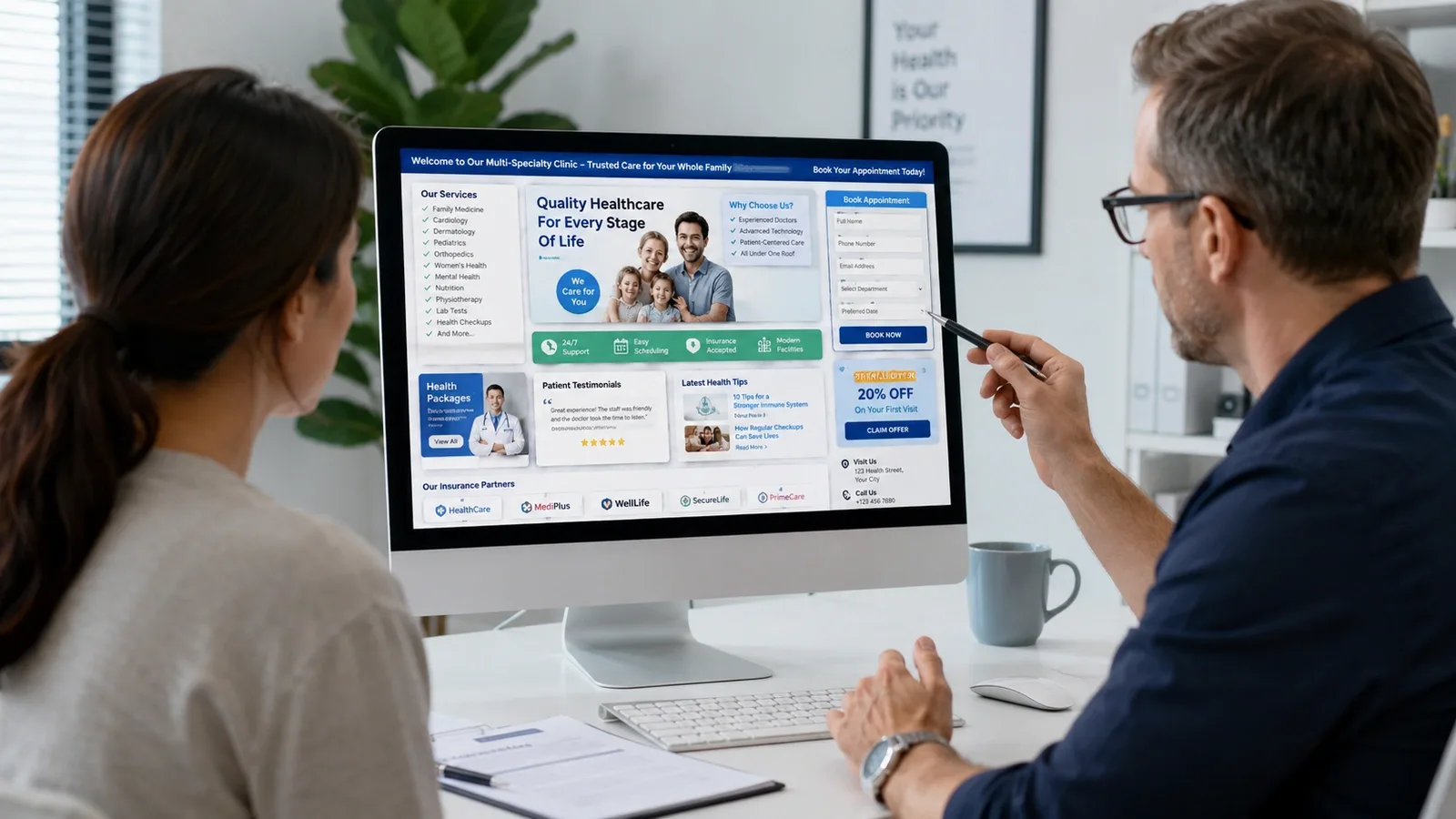
Healthcare businesses spend significant budgets on SEO, PPC advertising, social media campaigns, and patient acquisition strategies. However, many clinics fail to convert visitors into leads because their landing pages are poorly designed and lack clear conversion paths. A healthcare landing page should guide visitors toward a specific action such as booking an appointment, requesting a consultation, or contacting the clinic directly. When landing pages fail to meet patient expectations, clinics often lose valuable opportunities before conversations even begin.
Modern healthcare consumers expect fast-loading, mobile-friendly, trustworthy, and informative digital experiences. Patients judge professionalism based on website quality within seconds. Poor design choices such as confusing layouts, weak messaging, missing calls-to-action, or slow loading speeds can immediately reduce patient trust. Dental offices, medical clinics, orthodontic practices, and healthcare providers that invest in professional landing page design services often improve lead generation, patient engagement, and conversion rates significantly while strengthening their local SEO and AI search visibility.
Most Common Landing Page Mistakes Clinics Make
Many healthcare businesses focus heavily on driving traffic through SEO, Google Ads, and social media marketing but overlook the actual landing page experience. A poorly optimized landing page can waste advertising budgets and reduce patient inquiries even when campaigns generate strong website traffic. Patients expect fast, professional, and easy-to-navigate experiences before they decide to contact a healthcare provider.
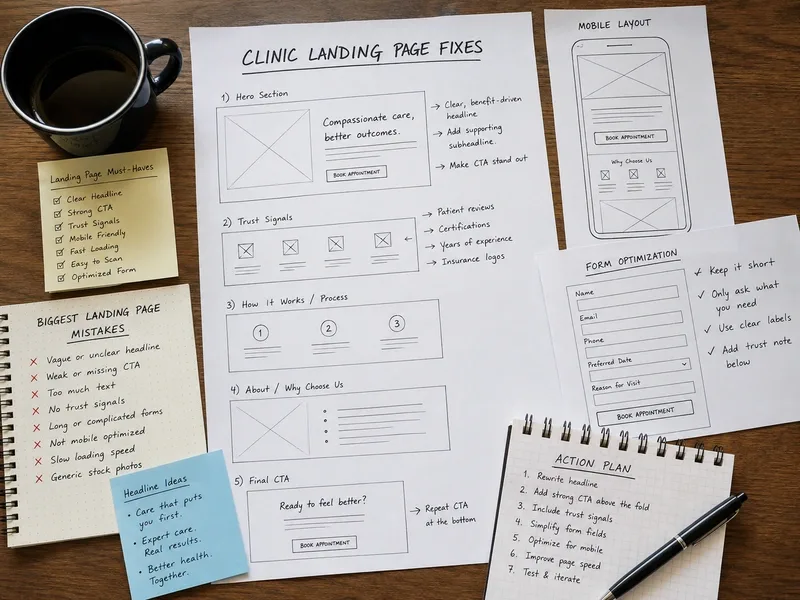
The most common landing page mistakes include weak headlines, slow website speeds, poor mobile responsiveness, cluttered layouts, missing trust signals, unclear calls-to-action, complicated forms, thin educational content, and inconsistent branding. These issues often lower patient confidence and reduce appointment bookings. Identifying and correcting these mistakes helps healthcare practices improve patient engagement, conversion rates, and long-term marketing performance.
Weak Headlines Reduce Visitor Engagement
A weak headline often causes visitors to leave quickly because they cannot immediately understand the clinic’s value. Strong healthcare landing page headlines should clearly explain services, patient benefits, and trust-building elements within the first few seconds. Generic headlines reduce engagement and make healthcare websites look similar to competitors. Clinics should use patient-focused messaging that highlights expertise, convenience, credibility, and solutions patients are actively searching for online.
Confusing Layouts
- Too many buttons, forms, and unnecessary design elements overwhelm visitors and reduce patient conversion opportunities. Simple and organized layouts improve user experience and guide visitors toward important actions.
- Cluttered healthcare landing pages create frustration and increase bounce rates, especially for mobile users searching quickly for healthcare providers, appointment options, or treatment information.
Clear and focused landing pages improve patient trust and increase healthcare lead conversion rates effectively.
Missing Clear Calls-To-Action
Healthcare landing pages without strong calls-to-action fail to guide visitors toward the next step. Patients should immediately understand how to contact the clinic, request information, or schedule appointments. Clear CTA buttons improve patient engagement and lead generation performance.
Effective CTA examples include:
- Schedule Your Consultation
- Request A Free Strategy Call
- Contact Our Marketing Team
- Book Your Appointment Today
Healthcare businesses using strong CTA placement throughout their landing pages often achieve higher conversion rates from SEO and healthcare PPC campaigns.
Common Landing Page Mistakes And Their Impact
| Landing Page Mistake | Negative Impact On Clinics |
|---|---|
| Weak Headlines | Lower visitor engagement and higher bounce rates. |
| Slow Loading Speed | Reduced patient trust and PPC performance. |
| Poor Mobile Experience | Lower rankings and reduced patient conversions. |
| Missing CTA Buttons | Visitors leave without contacting the clinic. |
| Cluttered Layout | Confused users and lower lead generation. |
Slow Loading Speeds
- Slow website performance negatively impacts healthcare SEO rankings, advertising campaign performance, and patient experience across all devices. Visitors often leave pages that take too long to load properly.
- Delayed loading times reduce patient trust during urgent healthcare searches and lower conversion opportunities from paid campaigns, organic traffic, and mobile healthcare searches.
“Studies show that 53% of mobile users leave landing page that take longer than three seconds to load.”

Poor Mobile Optimization
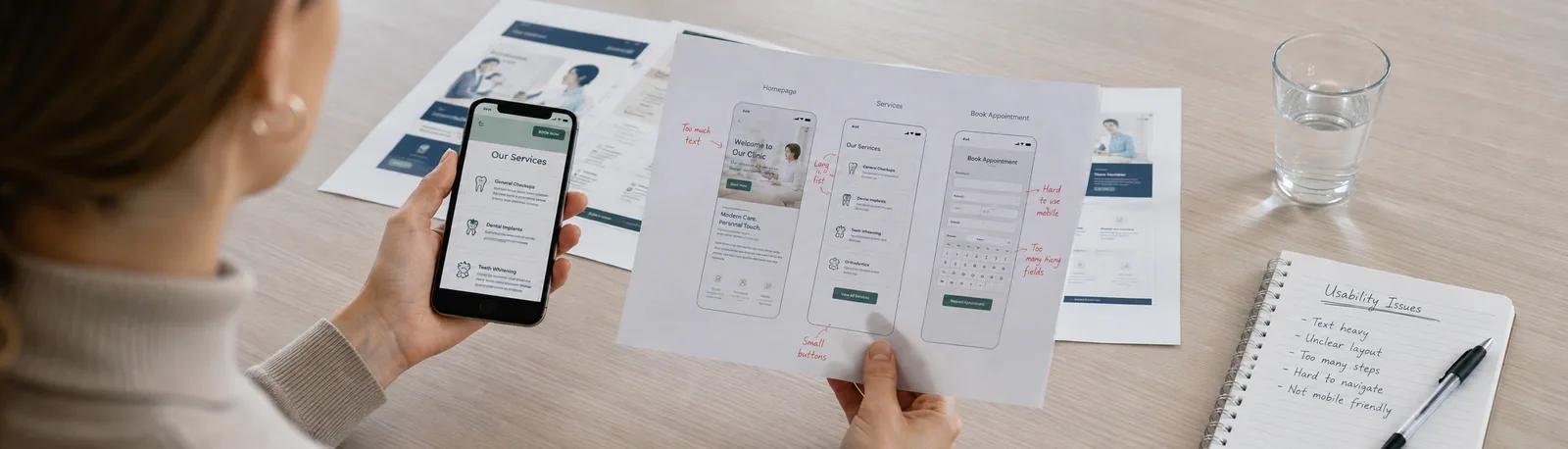
Most healthcare searches now happen on smartphones and tablets, especially when patients are searching for urgent dental care, nearby clinics, or appointment availability during busy schedules. A non-responsive healthcare landing page creates frustration and reduces both patient trust and search engine visibility. If users struggle to navigate the page, click buttons, or read information without zooming, they often leave within seconds and visit a competitor instead. Mobile-friendly healthcare website design is now essential for improving patient engagement, reducing bounce rates, and supporting healthcare SEO performance. Clinics with poorly optimized mobile experiences often lose valuable patient inquiries and appointment opportunities daily.
Contact UsGoogle prioritizes mobile-first indexing, meaning the mobile version of a website directly impacts rankings, local SEO visibility, and AI-driven search performance. Responsive healthcare landing pages improve user experience, Google Ads conversion rates, appointment request submissions, and patient interaction across all devices. Features such as fast-loading pages, mobile-friendly appointment forms, easy-to-click CTA buttons, and readable layouts help healthcare businesses generate more qualified leads. Patients expect speed, convenience, and clear navigation while browsing healthcare websites on mobile devices. Clinics that invest in responsive landing page optimization often achieve stronger digital visibility, improved patient trust, and better long-term healthcare marketing results.
Limited Educational Content
Thin or unclear content reduces visibility in search engines and AI-driven search experiences. Healthcare landing pages should answer real patient concerns while remaining easy to understand and professionally written.
Strong healthcare landing page content should naturally include semantic SEO and NLP phrases such as healthcare website conversion optimization, dental landing page design, clinic lead generation strategies, patient-focused website design, healthcare PPC optimization, and medical marketing conversion strategies. Educational and informative content improves both user engagement and AI engine recognition while helping healthcare businesses establish trust and authority online.
Lack Of Patient Trust Signals
Healthcare patients carefully evaluate trust before contacting any clinic online. Landing pages that lack trust-building elements often fail to convert visitors into patient inquiries. When users cannot quickly find reviews, provider credentials, certifications, or secure contact forms, they may question the professionalism of the practice. This is especially important for dental clinics, orthodontic offices, cosmetic practices, and specialized healthcare providers where patients compare multiple options before making decisions.
Trust signals help reduce hesitation and improve patient confidence during the decision-making process. Features such as patient testimonials, Google reviews, HIPAA-friendly forms, doctor experience highlights, and verified business information create reassurance for visitors. Strong trust indicators also improve engagement metrics, increase form submissions, and strengthen healthcare SEO and PPC campaign performance. Clinics that clearly showcase credibility on landing pages often generate better patient leads and stronger long-term marketing results.
Conclusion
Healthcare landing pages directly influence whether visitors become actual patients or leave without taking action. Even strong SEO campaigns, social media marketing, and PPC advertising strategies can fail when clinics use poorly optimized landing pages. Common mistakes such as weak headlines, slow loading speeds, confusing layouts, missing calls-to-action, and poor mobile responsiveness reduce trust and hurt conversion opportunities. Patients today expect professional, fast, informative, and easy-to-use digital experiences before choosing a healthcare provider.
Clinics that invest in professionally optimized healthcare landing pages position themselves for stronger online visibility, improved patient engagement, and long-term business growth. High-converting landing pages support healthcare SEO performance, improve AI search visibility, and help healthcare providers generate more qualified patient leads consistently.
Resource:
What Makes a Landing Page Convert Patients Into Appointments
FAQ
Still have a Question? Contact Us
Fast loading speed, mobile optimization, clear headlines, trust signals, and strong CTA placement improve healthcare landing page performance.
Most healthcare searches happen on smartphones, making mobile-friendly website experiences critical for patient engagement and SEO visibility.
Yes, optimized landing pages improve advertising quality scores and increase conversion rates from healthcare marketing campaigns.
Slow-loading healthcare landing pages frustrate users and increase bounce rates, reducing appointment requests and lead generation opportunities significantly.
Healthcare landing pages should include service information, patient benefits, trust indicators, FAQs, and clear appointment booking options.
Learn more about digital marketing in your field through our blogs