Web Design

    Law Firm Web Design: How to Make Sure Your Website Actually Gets You Clients

    "We have a website, but it doesn't really do anything." If you nod at that, the problem isn't that you lack a site — it's that visitors don't yet believe you're the attorney who can help them.

    Vigorant Healthcare Marketing TeamUpdated June 202610 min read
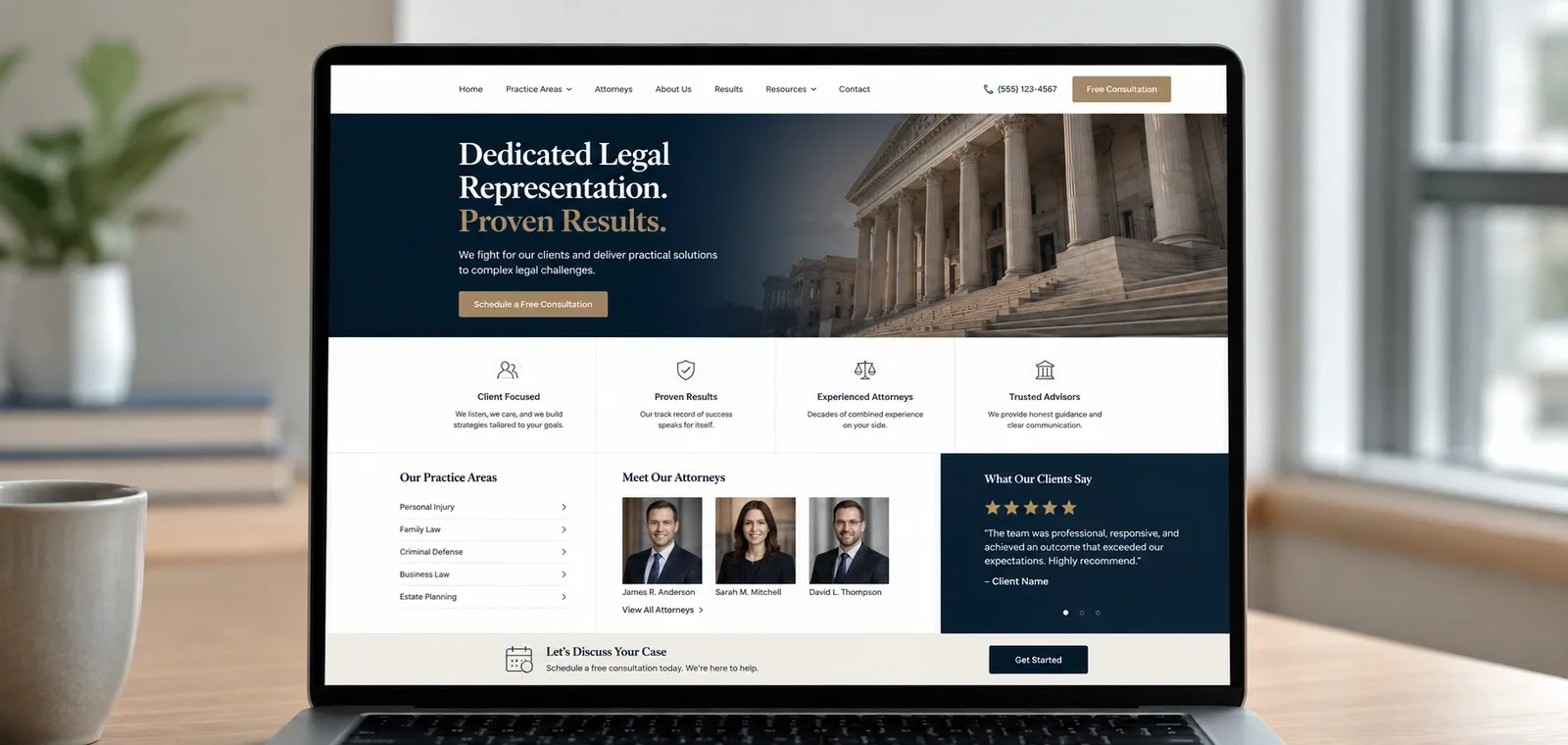
    Law firm partner reviewing the firm's website design on a laptop to attract more clients
    • Published:July 20, 2021 · Updated June 24, 2026
    • Author:Vigorant Healthcare Marketing Team
    • Category:Web Design · Professional Services Marketing · Client Acquisition
    The Real Problem

    Why a Website Can Exist and Still Fail to Win Clients

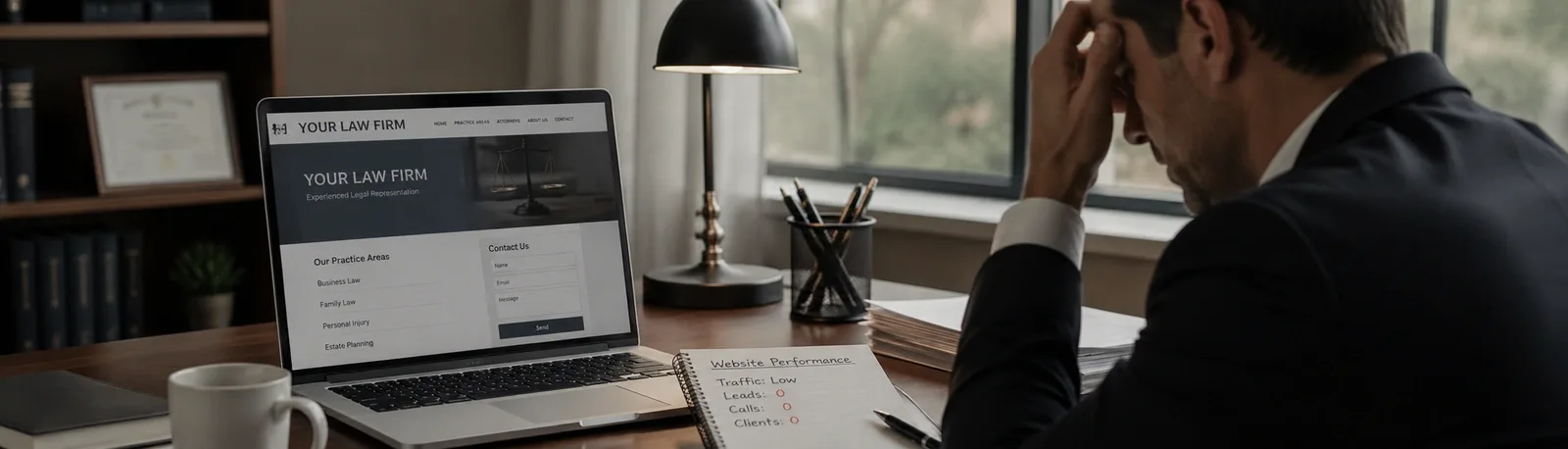
    One of the most common phrases law firm managers say is, "We have a website, but it doesn't really do anything." If you find yourself nodding, you are not alone. Many firms spend real time and money building a site, then wonder why the phone still doesn't ring. The simple answer: the visitors landing on your site do not feel that you are the one who can help them.

    A prospective client choosing a lawyer is often anxious, time-pressed, and comparing several firms in the same search session. They form a judgment about your competence and trustworthiness within seconds — long before they read a word about your credentials. If your design looks generic, loads slowly, or buries the information they need, they move on to a firm whose site feels more professional and reassuring.

    This is why the choice of how you build your website matters so much. A do-it-yourself template builder can put something online quickly, but "good enough" rarely competes in a crowded legal market. A professionally designed, conversion-focused site is engineered around the exact moment a worried prospect decides whether to call you. The rest of this guide compares the two honestly, so you can choose with confidence.

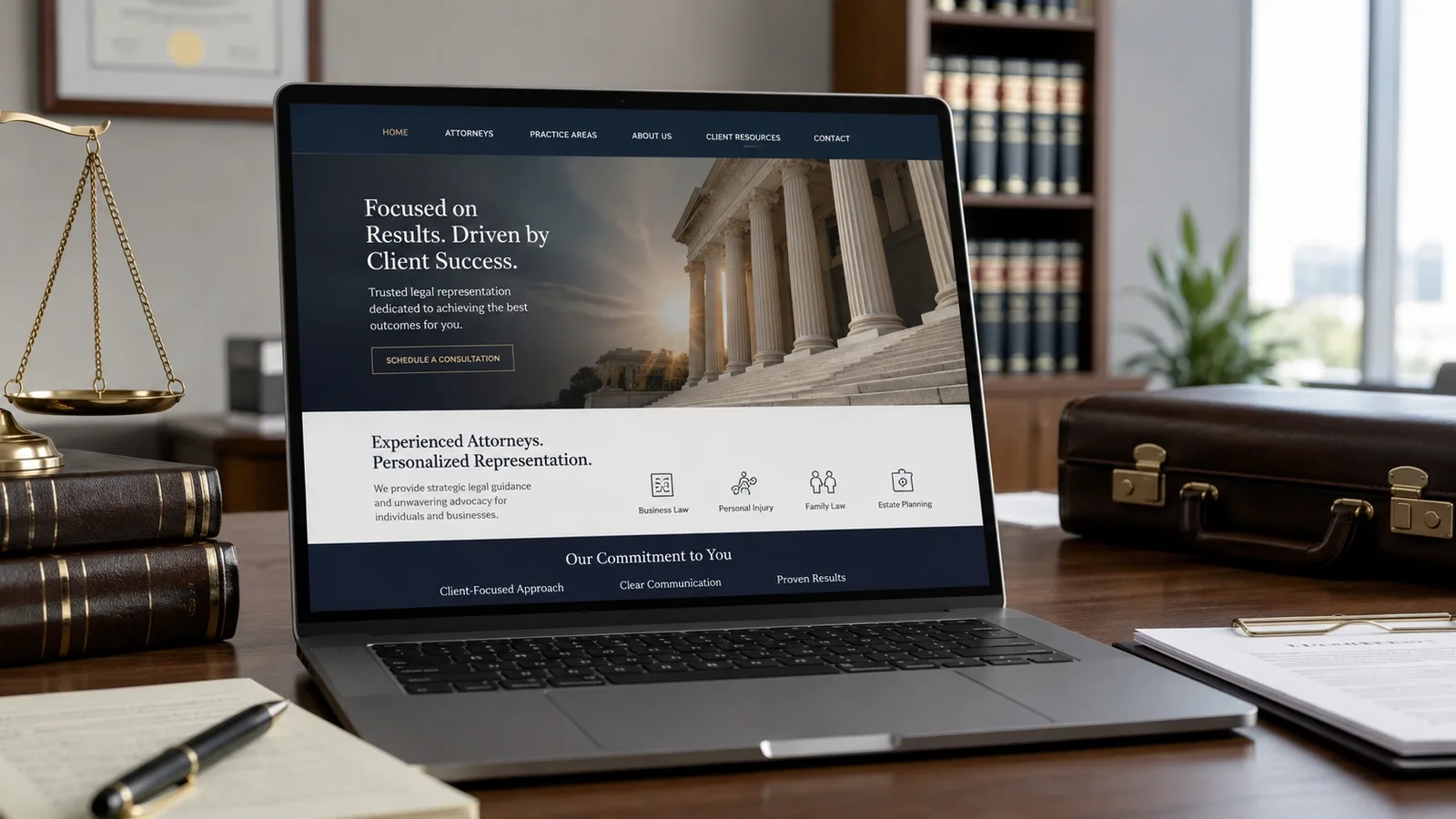
    "You have to have an excellent design that is clean, fast, and has all the information a visitor needs ready the moment they click on your site. Add your testimonials and proof of competence to build credibility."

    U.S. Small Business Administration — Marketing Guidance (sba.gov)
    Prospective client comparing law firm websites on a tablet before choosing an attorney
    The Upside

    Advantages of DIY Template Website Builders for Law Firms

    Where a do-it-yourself builder genuinely delivers value — especially for solo attorneys and brand-new practices with limited budgets.

    01

    Speed: From Idea to Live Site in Hours

    A custom, professionally designed law firm website typically takes several weeks to plan and build. A template builder can put a presentable site online in hours or days. For a new attorney who needs an immediate online presence — or a placeholder while a real build is underway — that speed is genuinely useful.

    02

    Lower Upfront Cost

    Most DIY website platforms run on a subscription of roughly $15 to $60 per month with no large design retainer. For a solo practitioner watching every dollar in the first year, this low entry point allows a basic web presence while revenue is reinvested into a more capable, client-generating platform later.

    03

    Built-in Mobile Responsiveness

    Leading builders produce mobile-responsive layouts by default. Since most people searching for an attorney do so on a phone — often urgently — a mobile-friendly baseline matters. Template builders have largely commoditized responsiveness that once required dedicated developer effort.

    04

    No-Code Editing and Updates

    An office manager or paralegal can update practice-area pages, add an attorney bio, or swap a photo without touching code. This independence reduces reliance on outside developers for small changes and lets you keep content fresh without waiting in a development queue.

    05

    Quick to Test a Practice Area

    If you are considering a new practice area or a new office location, a simple template page lets you test demand cheaply before committing to a full custom build. It is a low-risk way to validate a market — provided you treat it as an experiment, not your firm's flagship presence.

    Attorney shaking hands with a new client in a law office reception area
    Key Insight

    "For a law firm, where trust is the cornerstone of every hire, a generic or unconvincing website actively works against your credibility before a prospect ever reads your name."

    The Risks

    Disadvantages of DIY Web Design for Law Firms

    Where a do-it-yourself, template-only approach quietly costs you the cases you should have won — and what professional design solves.

    Law firm team reviewing website analytics and client inquiry data

    Generic Design That Undermines Trust

    Template builders draw from a finite library of layouts, so firms built on the same platform often look nearly identical — and indistinguishable from unrelated businesses. A prospect comparing two attorneys will almost always choose the one whose site feels more established and professional. For a law firm, design is not cosmetic; it directly shapes whether a worried visitor believes you can handle their case.

    Weak SEO Architecture for Legal Markets

    DIY builders give you template-level SEO: a page-title field, a meta-description field, maybe a sitemap. What they do not give you is the structural architecture a law firm needs to rank against entrenched competitors in a local market.
    Practice-area URL silosCity and neighborhood landing pagesSchema.org structured dataLocal pack & Google Business optimizationInternal linking architectureAuthoritative content depth

    Missing Trust Signals and Proof of Competence

    Winning a legal client is an act of trust. DIY sites tend to lean on stock photos and thin copy, leaving out the exact signals that convert: case results, verified reviews, attorney bios, bar credentials, awards, and media mentions. Without these placed where the decision happens, even relevant traffic bounces.

    Accessibility (ADA / WCAG) Gaps

    The Americans with Disabilities Act and WCAG 2.1 guidelines apply to law firm websites, and accessibility lawsuits against small businesses are rising. Template designs frequently ship with poor color contrast, missing image alt text, and weak keyboard navigation. A firm that is investigated or sued over an inaccessible site faces both legal cost and reputational damage.

    Thin Content and Low Authority

    Search engines reward depth, expertise, and trustworthiness — and legal topics, which affect people's rights and finances, are held to an especially high quality bar. A template site filled with generic, undifferentiated copy and no named author credentials struggles to rank for the high-intent searches that bring in real cases.

    "Successful marketing positions your firm as a trusted, credible expert — backed by visible proof, not just claims."

    U.S. Small Business Administration (2024)

    No Conversion Optimization

    DIY sites are built to look presentable, not to convert. They are not engineered around the decision psychology of someone urgently searching for a lawyer. Real client acquisition requires journey mapping, deliberate trust-signal placement, friction analysis on contact and intake forms, Core Web Vitals page-speed work, heatmaps, and iterative A/B testing — none of which a template provides.
    Head-to-Head

    DIY Template Builder vs. Professional Law Firm Web Design

    How a do-it-yourself website builder compares to professional, conversion-focused law firm web design across the criteria that decide whether visitors become clients.

    CriteriaDIY Template BuilderProfessional Law Firm Web Design
    Speed to LaunchHours to daysSeveral weeks (strategy-led)
    Upfront CostLow — monthly subscriptionHigher — project investment
    Design CustomizationTemplate-based; limited depthFully custom to your brand
    Unique Brand IdentityRisk of generic lookDistinct, built from scratch
    Trust & Credibility SignalsStock-heavy, thin proofCase results, bios, reviews built in
    ADA / WCAG AccessibilityInconsistent; needs auditEngineered intentionally
    SEO ArchitectureBasic on-page SEO onlyPractice-area silos + schema + local SEO
    Content QualityGeneric template copyExpert, authoritative copywriting
    Conversion OptimizationLimited or noneCRO testing & analytics
    Page Speed & MobileTemplate defaultsTuned for Core Web Vitals
    ScalabilityPlatform limits may applyHighly scalable
    Best ForBrand-new solo placeholderFirms competing to win cases

    A DIY builder can serve as a useful starting point or a temporary placeholder. For any law firm serious about attracting clients in a competitive market, professional, conversion-focused web design consistently outperforms template tools across the dimensions that actually turn visitors into signed cases.

    Decision Guide

    When DIY Works for a Law Firm — and When You Cannot Afford It

    ✓ A DIY Template Builder Makes Sense For:

    • A brand-new solo attorney who needs a basic placeholder while preparing a full professional build
    • A single practice-area or campaign landing page (e.g., a free-consultation offer)
    • Testing demand for a new practice area or office location before committing to full infrastructure
    • A simple informational page where competition is light and stakes are low

    ⚠ Professional Web Design Is Non-Negotiable When:

    • Your website is a primary channel for attracting new clients and cases
    • You compete in a dense local market where SEO depth and trust signals decide who gets the call
    • You handle high-value matters where credibility and proof of competence are essential
    • You operate multiple offices or a multi-attorney firm with several practice areas
    • You must meet ADA/WCAG accessibility standards and protect against compliance risk
    Vigorant's Approach

    How Vigorant Builds Websites That Turn Visitors Into Clients

    Vigorant's approach to professional web design rests on a principle a template can't replicate: combine genuine domain expertise with a rigorous, conversion-focused process built around how your prospective clients actually decide. We don't just make a site that looks good — we engineer one that earns trust and generates inquiries.

    • Custom design reflecting your firm's brand, real attorney photography, and proof of competence

    • Trust-signal architecture: case results, verified reviews, bios, credentials, and awards placed where they convert

    • Clean, fast, mobile-first builds tuned for Core Web Vitals and effortless contact

    • ADA/WCAG 2.1 accessibility built into the design system, not bolted on afterward

    • SEO architecture with practice-area silos, local landing pages, schema, and Google Business optimization

    • Conversion rate optimization with journey mapping, heatmaps, and ongoing A/B testing

    Marketing team reviewing a custom, conversion-focused law firm website design
    AI Search Visibility

    The GEO / AIO Factor: Is Your Firm Visible in AI Search?

    An increasingly important and often overlooked dimension of web strategy is Generative Engine Optimization (GEO) — structuring your content so AI-powered search tools surface your firm in generated answers. When someone asks ChatGPT, Google Gemini, Perplexity, Microsoft Copilot, or Claude 'Who is the best [practice area] attorney near me?', the assistant assembles its answer from web content it has indexed and judged authoritative. A thin template site rarely makes the cut.

    ChatGPTGoogle GeminiPerplexityMicrosoft CopilotClaude

    Clearly structured FAQ content with specific, authoritative answers

    Named attorney authors with verified credentials and bar admissions

    Schema.org markup identifying content type, publisher, and subject

    External citations from credible, institutional sources

    Consistent, expert-level content that builds real domain authority

    DIY website builders do not address GEO at all. It is an advanced content and technical strategy that requires specialist implementation — and it is fast becoming a decisive competitive factor in legal markets.

    FAQ

    Frequently Asked Questions

    Everything law firm owners ask about web design, DIY builders, trust signals, SEO, and when professional design is worth the investment.

    If your website exists but 'doesn't really do anything,' it usually means visitors do not feel confident you are the attorney who can help them. Most underperforming law firm sites lack three things: a clear, fast, professional design; visible proof of competence such as case results and testimonials; and an obvious next step to contact or book a consultation. Fixing trust signals, page speed, and calls to action typically does more for client acquisition than a cosmetic redesign alone.

    Ready to Grow?

    A Website Is a Starting Point — Winning Clients Is a Strategy.

    If your firm is ready for a website that works as hard as you do — built for trust, search visibility, and conversion — Vigorant is ready to help you turn visitors into signed cases.

    • Conversion-First Design
    • Proven Track Record
    • Built to Attract Clients