
Video Marketing Trends to Watch and How to Stay Ahead
The video marketing trends practice owners must watch, short-form, AI video, live streaming, video SEO, and how to stay ahead without risking compliance.
June 24, 202611 min read
Read article 
Video has become the dominant force in digital marketing. Businesses that understand and act on the latest video marketing trends are capturing more attention, driving higher engagement, and converting more viewers into customers.
In the ever-evolving digital marketing landscape, video has emerged as the dominant content format. Higher engagement rates, improved viewability, and the explosive growth of video-first platforms have pushed businesses of every size to incorporate video into their core marketing strategy.
But video marketing is not static. The formats, platforms, and viewer expectations that defined success two years ago are already being replaced by new trends. Businesses that track and adapt to these shifts, interactive video, shoppable content, live streaming, AR/VR, and AI-powered personalization, are building durable competitive advantages over those that do not.
"The play button is one of the most compelling calls-to-action on the web. Video content that is strategically aligned with viewer intent and platform behavior consistently outperforms every other content format for engagement and conversion."
Wyzowl State of Video Marketing Report

Each of these trends is actively reshaping how businesses capture attention, build trust, and drive conversions through video content.
Interactive videos are poised to be one of the most prominent video marketing trends of the coming years. This format goes beyond the traditional passive viewing experience, allowing viewers to engage with the content actively. Interactions can include clicking on hotspots, making choices that affect the video's outcome, or answering questions embedded within the video. The appeal of interactive video lies in its ability to capture and maintain viewer attention by making audiences active participants in the storytelling process. Brands can also implement shoppable hotspots within interactive videos, allowing viewers to purchase products directly, reducing friction in the buying journey and increasing conversion rates.
Interactive video performs best when the interaction is purposeful and adds genuine value to the viewer experience, not just novelty.


Short-form videos, typically under 60 seconds, have taken social media by storm. Platforms like TikTok, Instagram Reels, and YouTube Shorts have demonstrated that this snackable format is highly effective at capturing the attention of busy, on-the-go audiences. To succeed with short-form video, get straight to the point within the first three seconds, use creativity and humor to hook viewers immediately, participate in trending challenges and popular hashtags to boost discoverability, and offer bite-sized educational content that delivers genuine value. Short-form video will continue to dominate social media marketing feeds and strategies for the foreseeable future.
Social commerce has become one of the leading video marketing trends. Platforms like Instagram, TikTok, and Facebook are integrating shopping features directly into video content, making it easier for users to buy products without leaving their feed. Research shows that 84% of consumers have purchased a product after watching a video about it. Shoppable videos minimize steps in the buying process, reduce friction, and allow brands to showcase products in context. Combining shoppable video with user-generated content adds authenticity and social proof, two of the most powerful conversion drivers available to modern marketers.

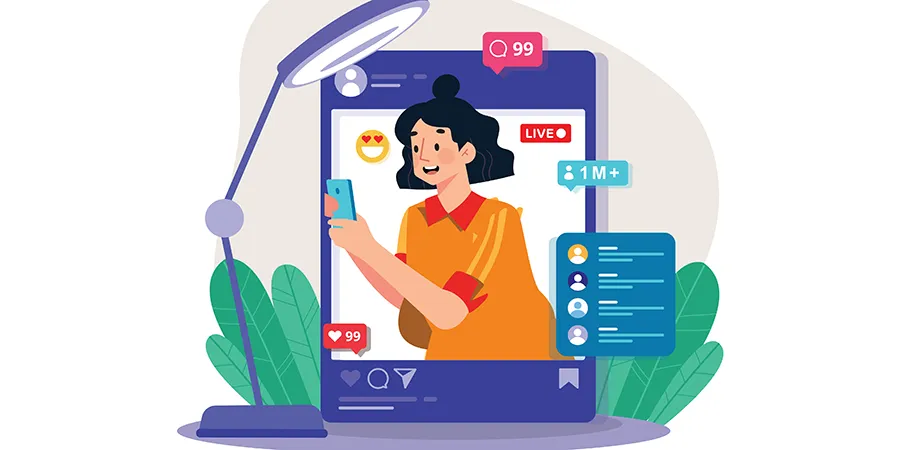
Live streaming has rapidly evolved from a niche platform feature to a mainstream marketing tool. Platforms like YouTube Live, Facebook Live, Instagram Live, and LinkedIn Live make it easier than ever for businesses to connect with their audience in real time. Live streaming fosters authentic connections, builds trust, and creates a sense of urgency that pre-recorded content cannot replicate. To maximize live streaming results, plan a consistent schedule so your audience knows when to tune in, engage actively with comments and questions during the broadcast, and repurpose live recordings into shorter clips for ongoing content distribution.
User-generated content (UGC) remains one of the most valuable assets in video marketing. It builds trust, fosters community, and provides social proof that branded content alone cannot achieve. Encouraging customers to create and share video content related to your products significantly enhances marketing credibility. To leverage UGC effectively, create campaigns or contests that incentivize video submissions, share UGC across your owned channels including email, website, and social media, and publicly acknowledge contributors to build a positive community that encourages ongoing participation.
Explore Vigorant's Web Design Service →

As online education and remote work continue to grow, demand for how-to and instructional video content is surging. The global e-learning market is projected to reach $457.8 billion by 2026, and video is the preferred learning format across virtually every demographic. How-to videos, whether tutorials, step-by-step guides, or product demonstrations, position brands as authoritative resources in their niche. To stay ahead of this trend, research the most common questions and pain points in your industry, create clear and actionable instructional content around them, and invite viewer feedback to continuously improve your educational video library.
Augmented reality (AR) and virtual reality (VR) technologies are becoming increasingly accessible, and they are finding their way into video marketing strategies across industries. These technologies transport viewers into virtual environments or allow them to interact with virtual elements in the real world. Fashion and beauty brands are implementing virtual try-on experiences that let customers preview products before purchasing. E-commerce businesses are creating virtual store tours that replicate the in-store experience from home. Interactive AR brand experiences leave lasting impressions and build the kind of emotional brand loyalty that standard video cannot match.

360-degree videos offer a level of immersion that standard video formats cannot match. Viewers can control their perspective and explore the full environment within the video, making this format ideal for product demonstrations, real estate walkthroughs, tourism experiences, and event coverage. Research shows that 98% of consumers find 360-degree video experiences more exciting than standard video. For product-based businesses, 360-degree video allows viewers to interact with a product virtually from every angle, helping them better understand features and benefits before making a purchase decision.
Platforms like Instagram, Snapchat, Facebook, and YouTube have embraced the stories format, short-lived, vertical videos or images available for a limited time, typically 24 hours. Stories appear at the top of users' feeds, making them highly visible and easily accessible. Their ephemeral nature creates urgency, and their less-curated feel resonates with audiences seeking authenticity. To capitalize on social media stories, post consistently to build anticipation among followers, use interactive features like polls, quizzes, and question boxes to encourage participation, and share behind-the-scenes glimpses that humanize your brand and deepen audience connection.

Personalization has been gaining momentum in video marketing for years, and AI is now making it possible at a scale that was previously unimaginable. Businesses can leverage AI and data analytics to segment audiences by demographics, behavior, and preferences, then deliver tailored video messages to each group automatically. Dynamic content insertion allows brands to personalize videos in real time, inserting a viewer's name, customizing product recommendations based on browsing history, or adjusting messaging based on geographic location. Businesses that embrace AI-powered personalization deliver more relevant content, achieve higher engagement rates, and drive significantly stronger conversion outcomes.
Interactive videos are poised to be one of the most prominent video marketing trends of the coming years. This format goes beyond the traditional passive viewing experience, allowing viewers to engage with the content actively. Interactions can include clicking on hotspots, making choices that affect the video's outcome, or answering questions embedded within the video. The appeal of interactive video lies in its ability to capture and maintain viewer attention by making audiences active participants in the storytelling process. Brands can also implement shoppable hotspots within interactive videos, allowing viewers to purchase products directly, reducing friction in the buying journey and increasing conversion rates.
Interactive video performs best when the interaction is purposeful and adds genuine value to the viewer experience, not just novelty.
Short-form videos, typically under 60 seconds, have taken social media by storm. Platforms like TikTok, Instagram Reels, and YouTube Shorts have demonstrated that this snackable format is highly effective at capturing the attention of busy, on-the-go audiences. To succeed with short-form video, get straight to the point within the first three seconds, use creativity and humor to hook viewers immediately, participate in trending challenges and popular hashtags to boost discoverability, and offer bite-sized educational content that delivers genuine value. Short-form video will continue to dominate social media marketing feeds and strategies for the foreseeable future.
Social commerce has become one of the leading video marketing trends. Platforms like Instagram, TikTok, and Facebook are integrating shopping features directly into video content, making it easier for users to buy products without leaving their feed. Research shows that 84% of consumers have purchased a product after watching a video about it. Shoppable videos minimize steps in the buying process, reduce friction, and allow brands to showcase products in context. Combining shoppable video with user-generated content adds authenticity and social proof, two of the most powerful conversion drivers available to modern marketers.
Live streaming has rapidly evolved from a niche platform feature to a mainstream marketing tool. Platforms like YouTube Live, Facebook Live, Instagram Live, and LinkedIn Live make it easier than ever for businesses to connect with their audience in real time. Live streaming fosters authentic connections, builds trust, and creates a sense of urgency that pre-recorded content cannot replicate. To maximize live streaming results, plan a consistent schedule so your audience knows when to tune in, engage actively with comments and questions during the broadcast, and repurpose live recordings into shorter clips for ongoing content distribution.
User-generated content (UGC) remains one of the most valuable assets in video marketing. It builds trust, fosters community, and provides social proof that branded content alone cannot achieve. Encouraging customers to create and share video content related to your products significantly enhances marketing credibility. To leverage UGC effectively, create campaigns or contests that incentivize video submissions, share UGC across your owned channels including email, website, and social media, and publicly acknowledge contributors to build a positive community that encourages ongoing participation.
Explore Vigorant's Web Design Service →As online education and remote work continue to grow, demand for how-to and instructional video content is surging. The global e-learning market is projected to reach $457.8 billion by 2026, and video is the preferred learning format across virtually every demographic. How-to videos, whether tutorials, step-by-step guides, or product demonstrations, position brands as authoritative resources in their niche. To stay ahead of this trend, research the most common questions and pain points in your industry, create clear and actionable instructional content around them, and invite viewer feedback to continuously improve your educational video library.
Augmented reality (AR) and virtual reality (VR) technologies are becoming increasingly accessible, and they are finding their way into video marketing strategies across industries. These technologies transport viewers into virtual environments or allow them to interact with virtual elements in the real world. Fashion and beauty brands are implementing virtual try-on experiences that let customers preview products before purchasing. E-commerce businesses are creating virtual store tours that replicate the in-store experience from home. Interactive AR brand experiences leave lasting impressions and build the kind of emotional brand loyalty that standard video cannot match.
360-degree videos offer a level of immersion that standard video formats cannot match. Viewers can control their perspective and explore the full environment within the video, making this format ideal for product demonstrations, real estate walkthroughs, tourism experiences, and event coverage. Research shows that 98% of consumers find 360-degree video experiences more exciting than standard video. For product-based businesses, 360-degree video allows viewers to interact with a product virtually from every angle, helping them better understand features and benefits before making a purchase decision.
Platforms like Instagram, Snapchat, Facebook, and YouTube have embraced the stories format, short-lived, vertical videos or images available for a limited time, typically 24 hours. Stories appear at the top of users' feeds, making them highly visible and easily accessible. Their ephemeral nature creates urgency, and their less-curated feel resonates with audiences seeking authenticity. To capitalize on social media stories, post consistently to build anticipation among followers, use interactive features like polls, quizzes, and question boxes to encourage participation, and share behind-the-scenes glimpses that humanize your brand and deepen audience connection.
Personalization has been gaining momentum in video marketing for years, and AI is now making it possible at a scale that was previously unimaginable. Businesses can leverage AI and data analytics to segment audiences by demographics, behavior, and preferences, then deliver tailored video messages to each group automatically. Dynamic content insertion allows brands to personalize videos in real time, inserting a viewer's name, customizing product recommendations based on browsing history, or adjusting messaging based on geographic location. Businesses that embrace AI-powered personalization deliver more relevant content, achieve higher engagement rates, and drive significantly stronger conversion outcomes.
"The beauty of creating a video marketing plan lies in making it easier for the viewer to get the information they need, in the format they prefer, on the platform they already use."
For the latest video marketing statistics and platform benchmarks, see the Wyzowl State of Video Marketing Report linked in the footer of this page.
See how adopting current video marketing trends changes every dimension of your content performance and business results.
Hover or tap each card to flip
Broad, demographic-only reach
Behavioral, intent-based, platform-specific
Long-form only, low completion rates
Mixed formats matched to platform and intent
Ignored or inconsistent
Consistent TikTok, Reels, and Shorts strategy
Passive viewing, low interaction
Interactive elements driving active participation
Video drives to external product pages
Shoppable video enables in-feed purchases
Absent or ad hoc broadcasts
Scheduled live series building loyal audiences
Brand-only content, lower trust
UGC integrated for authentic endorsement
Standard flat video only
AR, VR, and 360-degree video experiences
Generic one-size-fits-all messaging
AI-driven personalization per viewer segment
Occasional blog posts, no video tutorials
Consistent how-to video library building authority
View counts only, no actionable insight
Engagement depth, drop-off analysis, A/B testing
Adopting video marketing trends does not require a massive production budget. It requires a clear strategy, consistent execution, and a willingness to test new formats. The brands winning in 2025 are those combining creative storytelling with data-driven optimization, and a website built to convert the traffic that video generates.
Understanding these realities helps businesses invest in video marketing with clear, realistic expectations and avoid common pitfalls.
Chasing every new video format without a defined content strategy leads to inconsistent messaging, wasted production budget, and poor results. Every video marketing trend should be evaluated against your specific audience, goals, and brand positioning before adoption.
Publishing high volumes of video content without genuine brand voice, real customer stories, or meaningful value for the viewer will not build the trust or loyalty that drives long-term business growth. Authenticity consistently outperforms production quantity.
Video marketing drives traffic and builds intent, but if the website viewers land on is slow, poorly designed, or difficult to navigate, that intent is lost. A high-converting, well-designed website is the essential foundation that transforms video viewers into paying customers.
AI-powered video personalization and analytics tools are powerful accelerators, but they cannot determine your brand's unique angle, craft a compelling narrative, or make the creative decisions that differentiate your content from competitors. Human creative direction remains essential.
"Video marketing trends are most powerful when they are built on a foundation of clear strategy, authentic storytelling, and a website designed to convert the attention video creates."
In 2025 and beyond, a growing share of content discovery begins on AI interfaces, not just Google's standard results page. Viewers and buyers ask ChatGPT, Gemini, Perplexity, and Claude for recommendations on the best video formats, marketing strategies, and service providers. Whether your brand is cited in those answers depends entirely on the structural authority of your content.
Directly answers the exact questions marketers and buyers ask AI assistants about video strategy
Verifiable credentials and organizational affiliations cited on content pages
BlogPosting, FAQPage, and Organization entities correctly implemented for AI indexing
Links to peer-reviewed research, industry reports, and credible non-commercial sources
Broad, consistent library of expert-level video marketing content covering all major formats and platforms
Fast-loading, mobile-first, error-free website that AI crawlers can index completely and reliably

Vigorant is a growth marketing agency that helps businesses turn video marketing momentum into measurable results. We design and build high-converting websites that capture the traffic your video content generates, and we build the digital infrastructure that makes every video marketing trend work harder for your business.
Custom websites engineered for conversion, built to receive and convert video-driven traffic
SEO and AEO strategy that ensures your video content is found on Google and AI search platforms
Website design optimized for shoppable video integration and social commerce
Landing pages built to convert viewers from short-form video and live streaming campaigns
Technical performance optimization ensuring fast load times for video-heavy pages
Analytics and CRO strategy that connects video engagement data to real business outcomes
Everything businesses and marketers need to know about video marketing trends, formats, platforms, and how to build a strategy that drives real results.
The most impactful video marketing trends include short-form video on platforms like TikTok and Instagram Reels, interactive video experiences that let viewers make choices, shoppable videos that enable direct in-video purchases, live streaming for real-time audience connection, user-generated video content for social proof, AR and VR immersive experiences, 360-degree video, and AI-powered personalization at scale. Businesses that adopt these formats strategically are seeing higher engagement rates and stronger conversion performance.
Short-form video, typically under 60 seconds, is highly effective because it matches the consumption habits of modern audiences who scroll quickly and make fast attention decisions. Platforms like TikTok, Instagram Reels, and YouTube Shorts have demonstrated that concise, visually engaging content drives higher completion rates, shares, and discovery. For marketers, short-form video offers a low-cost, high-reach format that can be produced consistently and tested rapidly.
A shoppable video is a video format that includes embedded product links or interactive purchase hotspots, allowing viewers to buy products directly from within the video without leaving the platform. Platforms like Instagram, TikTok, and YouTube support shoppable video integrations. This format reduces friction in the buying journey by connecting product discovery and purchase intent in a single seamless experience, which is why it consistently drives higher conversion rates than standard product videos.
Live streaming creates real-time, authentic connections between brands and their audiences. It allows businesses to host product launches, Q&A sessions, behind-the-scenes tours, and live demonstrations that feel immediate and unscripted. Platforms like YouTube Live, Facebook Live, Instagram Live, and LinkedIn Live make it accessible for businesses of all sizes. Consistent live streaming builds audience loyalty, increases watch time, and generates content that can be repurposed into shorter clips after the broadcast.
User-generated content (UGC) in video marketing refers to videos created by customers, fans, or community members about a brand's products or services. UGC is one of the most trusted forms of social proof because it comes from real people rather than the brand itself. Businesses that actively encourage, curate, and share UGC videos benefit from increased authenticity, reduced content production costs, and stronger community engagement. UGC also performs well in paid advertising when used as creative assets.
Augmented reality (AR) and virtual reality (VR) are being used in video marketing to create immersive brand experiences. AR applications include virtual try-on features for fashion and beauty products, interactive product demonstrations, and AR filters on social media platforms. VR is used for virtual store tours, immersive brand storytelling, and event experiences. As AR and VR hardware becomes more accessible, these formats are moving from experimental to mainstream marketing channels for forward-thinking brands.
Personalized video marketing uses data and AI to deliver video content tailored to individual viewers based on their demographics, behavior, purchase history, or preferences. AI enables personalization at scale by dynamically inserting viewer-specific elements, such as names, product recommendations, or location-relevant offers, into video content in real time. This approach significantly increases engagement and conversion rates compared to generic video campaigns because viewers receive content that feels directly relevant to them.
Getting started with video marketing requires defining clear goals, whether brand awareness, lead generation, or customer retention, and selecting the right formats and platforms for your audience. Begin with short-form content for social media, invest in at least one live streaming series, and build a library of educational how-to videos relevant to your niche. Encourage customers to share UGC, optimize all videos for SEO with descriptive titles and transcripts, and use analytics to identify which formats drive the most engagement and conversions. A well-designed website that showcases your video content effectively is also essential for converting viewers into customers.
Vigorant helps businesses build the digital foundation that makes every video marketing trend work, from a high-converting website that captures video-driven traffic to SEO and AEO strategies that ensure your content is found on Google and AI search platforms.
The video marketing trends practice owners must watch, short-form, AI video, live streaming, video SEO, and how to stay ahead without risking compliance.
Should your dental or medical practice invest in short-form video? Explore the real advantages, disadvantages, and 2026 trends versus long-form healthcare video marketing.
Discover how AI-powered video marketing helps businesses create personalized content, automate production, optimize campaigns, and drive higher engagement and conversions. Vigorant explains exactly where AI delivers results in video marketing.