
01
Faster Patient Decisions
Patients often decide quickly when searching on mobile. A clear landing page helps them understand the service, location, benefits, and next step without pinching, zooming, or hunting through a full website menu.
Mobile-first landing pages help healthcare practices reduce friction, improve lead quality, and turn more paid, search, and referral traffic into patient conversations.
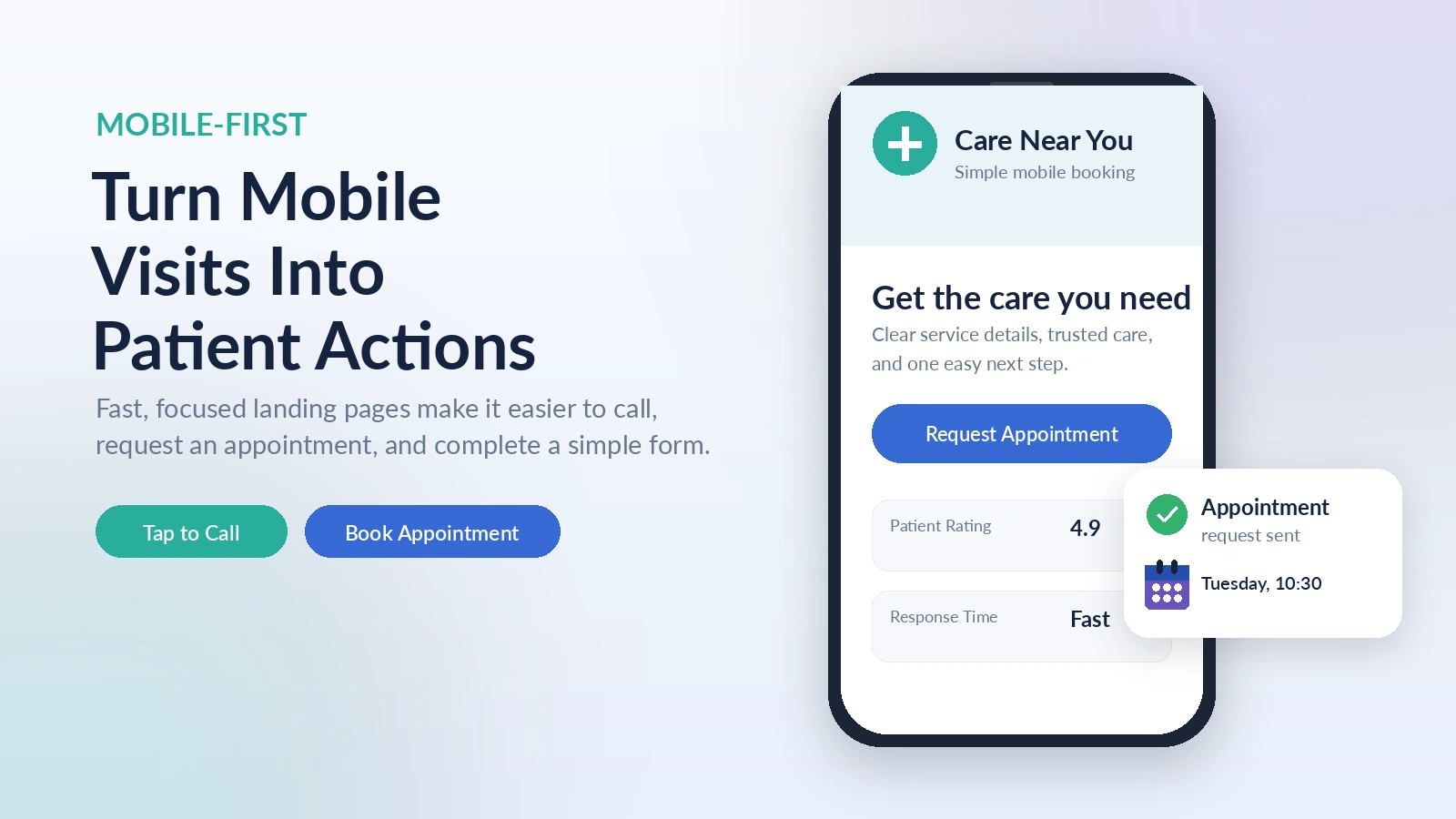
Mobile-friendly landing pages have changed how healthcare practices turn online attention into real patient inquiries. Most patients now search for healthcare services from a smartphone before they ever call a practice. They may be looking for a nearby dentist, urgent appointment, cosmetic consultation, primary care provider, or specialist while they are busy, worried, or comparing options.
A mobile-friendly landing page is a focused web page built to work smoothly on small screens. It should load quickly, present the service clearly, use readable text, make buttons easy to tap, and guide the visitor toward one action, such as calling the office, requesting an appointment, or submitting a short form.
For healthcare practices, mobile usability is not only a design feature. It is part of the patient acquisition process. A strong mobile page helps visitors understand the service, trust the provider, and take action without confusion. When the page works well on a smartphone, the practice has a stronger chance of turning paid traffic, search traffic, and referral traffic into real patient inquiries.
"Google reports that 53% of mobile visits are likely abandoned when pages take longer than three seconds to load."
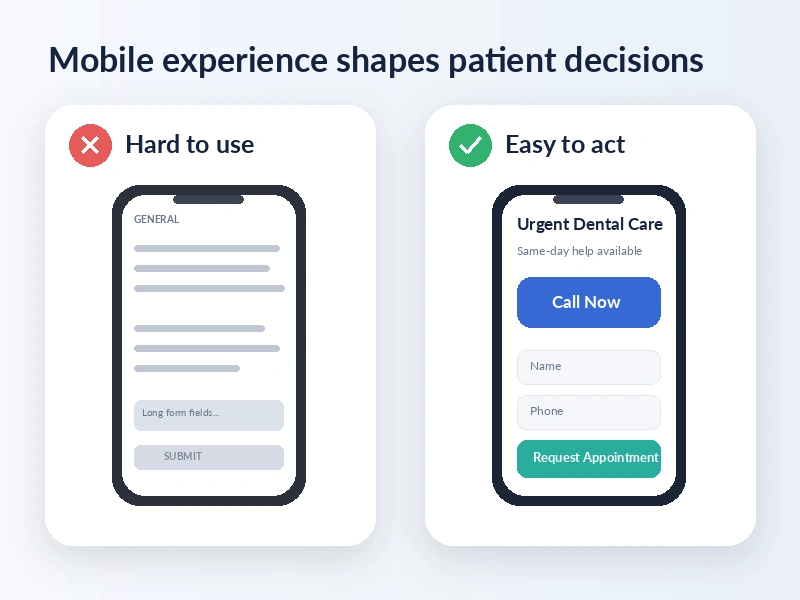
Where mobile-first landing pages deliver real value for dental, medical, and chiropractic practices that want stronger patient conversion results.
Patients often decide quickly when searching on mobile. A clear landing page helps them understand the service, location, benefits, and next step without pinching, zooming, or hunting through a full website menu.
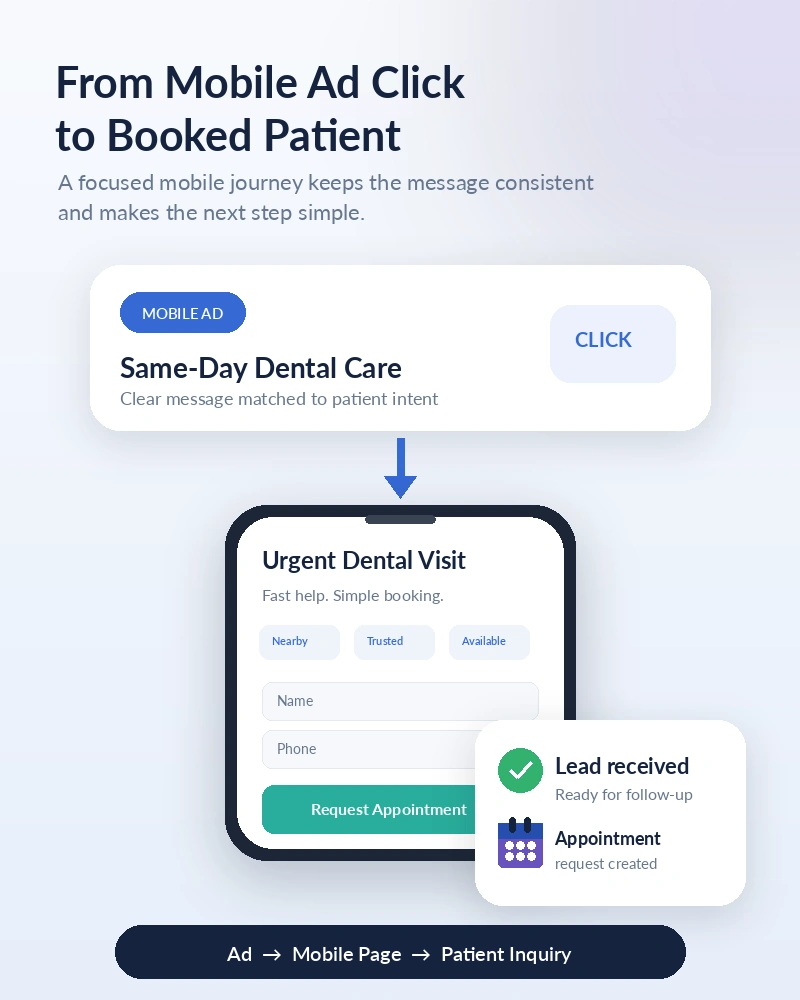
Many healthcare ad clicks come from smartphones. When the landing page matches the ad message and is easy to use on mobile, each click has a better chance of becoming a call, form submission, or booked appointment.
A focused mobile landing page gives patients the right information before they contact the practice. This can reduce confused calls, improve form accuracy, and help front desk teams speak with more qualified prospects.
Tap-friendly phone buttons, short forms, clear appointment prompts, and visible trust signals make it easier for patients to move from interest to action. This is especially important for urgent, cosmetic, implant, and specialty care searches.
Reviews, credentials, service explanations, and provider credibility can be placed near conversion sections so patients feel more comfortable taking the next step from their phone.
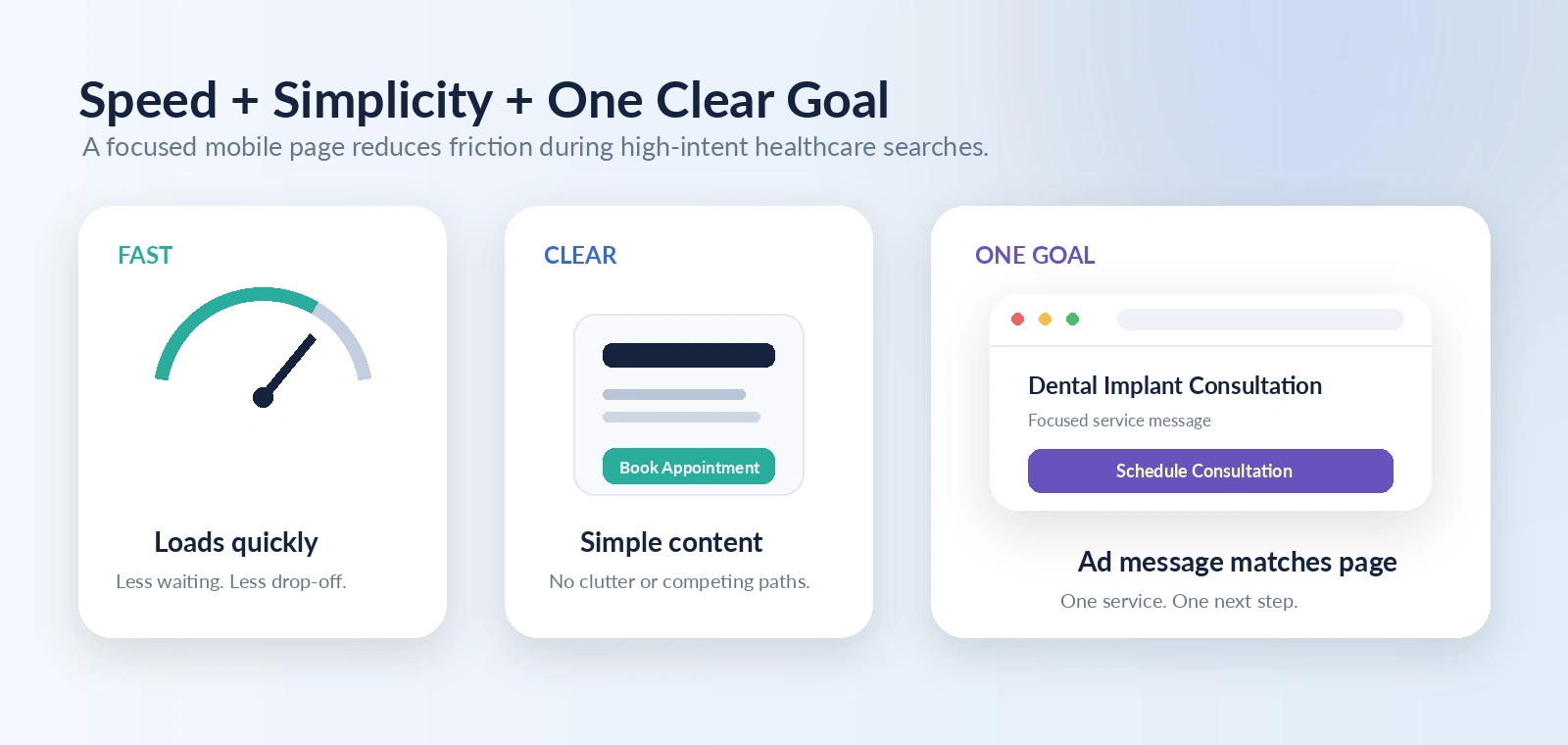
"In healthcare, where trust affects every conversion, a slow or confusing mobile page can work against the practice even when the service itself is strong."
Where weak mobile pages create missed calls, lost leads, higher ad costs, and patient trust issues that practice owners must understand.
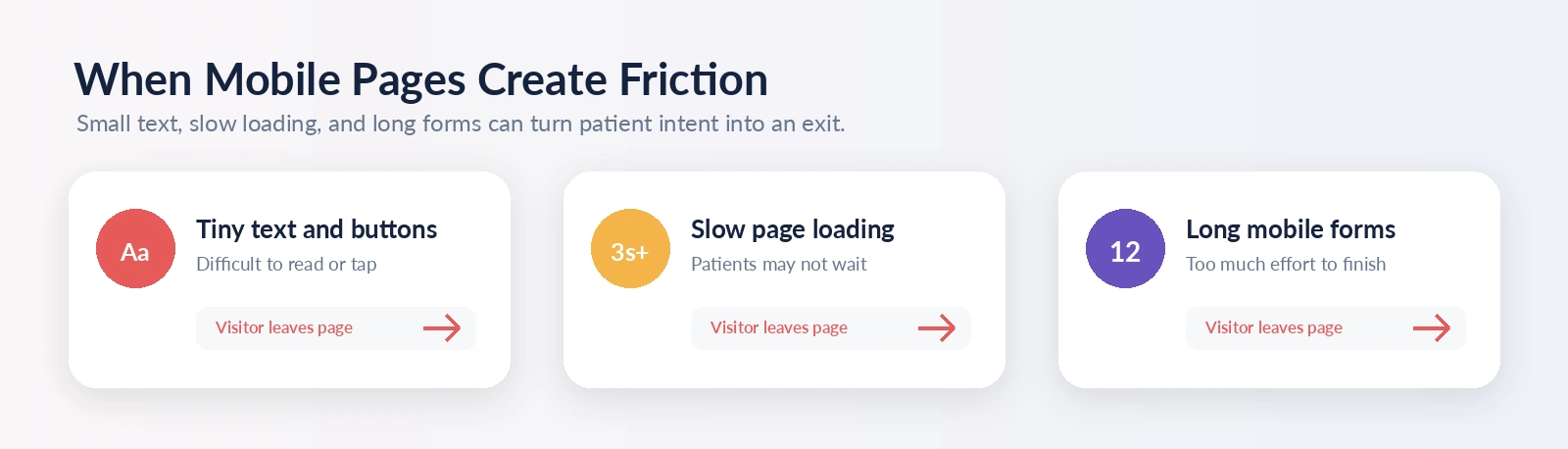
"A mobile landing page should guide visitors toward one clear action instead of overwhelming them with clutter, pop-ups, and competing messages."
How focused mobile landing pages compare to general website pages across the criteria that matter most for patient acquisition.
| Criteria | Mobile-Friendly Landing Page | General Website Page |
|---|---|---|
| Primary Goal | One clear conversion action | Multiple browsing paths |
| Mobile Speed Focus | Built for fast mobile decisions | May include heavier navigation and content |
| Message Match | Matches one ad, service, or search intent | Often covers many services at once |
| CTA Clarity | Call, form, or appointment request repeated clearly | CTA may be less prominent |
| Form Experience | Short, mobile-friendly form | May use longer general contact forms |
| Trust Signals | Reviews and credentials near action points | Trust signals may be spread across the site |
| Paid Ad Performance | Designed to improve campaign conversion rates | Can waste clicks if intent is not matched |
| Tracking | Service-specific calls, forms, and conversions | Broader analytics with less campaign clarity |
| Patient Journey | Focused from first click to first conversation | Useful for research, less direct for conversion |
| Best For | Service campaigns, ads, urgent care, consult requests | General education and brand browsing |
A general website is still important, but campaign traffic needs a focused mobile experience. Mobile-friendly landing pages help reduce friction at the exact moment a patient is ready to call, book, or submit a form.
Vigorant's landing page design approach is built around patient intent, mobile usability, clear messaging, and measurable conversion performance for dental, medical, and chiropractic practices.
Service-specific landing page strategy matched to patient search and ad intent
Fast mobile layouts with readable content and tap-friendly calls-to-action
Short forms and click-to-call options designed for smartphone users
Trust signals, reviews, provider credibility, and location cues placed near conversion sections
Campaign tracking for calls, forms, appointment requests, and qualified lead opportunities
AEO and GEO-ready FAQ content that helps practices answer patient questions clearly
A critical and often overlooked dimension of modern landing page strategy is Generative Engine Optimization (GEO), the practice of structuring content so AI-powered search engines can understand, summarize, and surface your practice in generated answers. When a prospective patient asks ChatGPT, Google Gemini, Perplexity, or Microsoft Copilot about a nearby dentist, specialist, or healthcare service, clear landing page content can help support visibility.
Clearly structured FAQ content with specific patient-focused answers
Service-specific page content tied to location and treatment intent
Schema.org markup for FAQ, breadcrumb, organization, and service context
External citations from credible, non-commercial sources where appropriate
Consistent expert-level content that builds authority over time
Mobile landing pages should be built for both human patients and modern search systems. Clear structure, strong FAQ content, and technical markup can support patient understanding, search visibility, and AI answer readiness.
Everything healthcare practice owners need to know about mobile-friendly landing pages, patient conversions, paid traffic, and when to optimize campaign pages.
Mobile landing pages matter because most patients search from smartphones before calling or booking. A mobile-friendly page helps them understand the service, trust the provider, and take action without frustration. For dental, medical, and chiropractic practices, this can improve call volume, form submissions, lead quality, and booked appointment opportunities.
A mobile-friendly landing page loads quickly, uses readable text, includes tap-friendly buttons, keeps forms short, and presents one clear service message. It should make calling, requesting an appointment, or submitting a form simple on a smartphone. Trust signals such as reviews, credentials, and location details should also be easy to find.
Yes. Clear mobile landing pages reduce friction at the exact moment a patient is deciding whether to contact a practice. When the page is fast, focused, and easy to use, patients are more likely to call, complete a form, or request an appointment instead of leaving for another provider.
Mobile-friendly landing pages help paid campaigns perform better because many healthcare ad clicks come from smartphones. When the landing page matches the ad message, loads quickly, and focuses on one action, each click has a stronger chance of becoming a call, form submission, or booked appointment.
Yes. Dental patients often search from smartphones for urgent care, cosmetic dentistry, dental implants, Invisalign, and nearby services. A service-specific mobile landing page gives them the right information quickly and makes it easier to call or request a consultation.
Common mistakes include slow load times, small text, long forms, confusing navigation, weak calls-to-action, missing trust signals, and sending ad traffic to a general homepage instead of a focused service page. These issues can reduce conversions and increase wasted ad spend.
A strong mobile landing page should lead with a clear headline, service benefit, location relevance, trust signals, simple contact options, and a short form. It should focus on one service and one conversion goal so patients can take the next step without confusion.
Vigorant can audit, design, and optimize mobile-friendly landing pages for healthcare practices. The process focuses on patient intent, mobile usability, clear messaging, conversion tracking, and campaign alignment so practices can turn more clicks into qualified inquiries and appointment opportunities.
If your dental, medical, or chiropractic practice is paying for traffic, every click should lead to a page built for trust, clarity, mobile usability, and measurable appointment opportunities.
Service-specific pages, trust signals, mobile-first design, and clear conversion paths, the landing page strategies that help healthcare practices attract patients who are actually ready to book.
Headlines, CTAs, forms, and mobile speed, how dental, medical, and chiropractic practices use A/B testing to lift landing page conversions and the quality of the patient leads they get.
Clear copy, reviews, privacy reassurance, provider credibility, and a visible next step, how doctors, dentists, and chiropractors turn landing page visitors into booked appointments.